



<!-- IMAGE -->Guinea's military ruler is trying to distance himself from Monday's
killing of at least 150 opposition demonstrators by security forces. The death toll from Monday's shootings continues to rise as victims of
the violence are located.
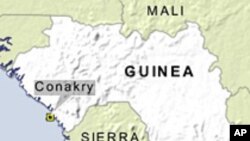
Military police opened fired on demonstrators at Conakry's September 28 Stadium who were protesting the expected candidacy of military ruler Captain Moussa Dadis Camara.
International condemnation of Monday's killing is mounting, with the Economic Community of West African States expressing its 'disgust' at the attacks. Former colonial power France says Captain Camara should listen to the Guinean people's legitimate aspiration to choose their leaders democratically.
Captain Camara is trying to distance himself from the killings, which mark the worst violence since he took power in a bloodless coup last December.
In an interview with Senegal's RFM Radio, Captain Camara said he wanted to go to the site of the attacks, but advisors told him it was not safe. He insisted he did not want the violence to occur and did not take power to have a confrontation with the Guinean people.
The scale of the killing will be difficult to determine because the military reportedly collected bodies themselves rather than allowing them to be counted at public morgues.
Human Rights Watch's Senior West Africa Researcher, Corinne Dufka, says Captain Camara should order an immediate investigation into Monday's violence.
"Dadis Camara has attributed these acts to uncontrolled elements within the military," she said. "This is completely and utterly unacceptable. This sounded like a well-organized operation. There were a number of military cars. If he is serious, he should order an investigation immediately and take immediate and concrete steps to hold those responsible accountable for this."
Dufka says Guinean security forces attacked unarmed civilians.
"I spoke to numerous witnesses in Guinea last night who described a horrific scene in which demonstrates who had gathered to protest the presumed candidacy of Captain Dadis Camara for the upcoming presidential elections in the stadium. Shortly after the political opposition leaders had arrived at the stadium the joint force of what sounded like police, military, red berets and gendarmes entered the stadium and started firing up in the air, throwing tear gas, as well as firing into the crowd," said Corinne Dufka.
Demonstrators held signs that read "No to Dadis." As they marched from the capital's outskirts into the city, they burned the furniture of at least one police station along the way.
Captain Camara took power last December hours after the death of longtime president Lansana Conte. The 45-year-old promised he would hold fair elections for Guinea and said he would not run for president in those elections.
But the ruling military council has since decided that anyone is eligible to stand in next year's scheduled presidential and legislative balloting. Last month, Captain Camara began telling his supporters that he will not insult them by ignoring their demands that he run for president.
Dufka says the protests mark a deep desire among many Guineans for a true democracy after decades of oppressive rule.
"I think also there is a deeper dynamic here, is that the Guinean people have lived through two long, authoritarian, brutal and corrupt regimes, and they are fed up. They want elections. They want free and fair elections, in which the process is dominated by civilians and not by the military," she said.
Though he has not formally announced his candidacy, the African Union has already announced it will sanction Captain Camara if he runs. The AU says it is concerned about what it calls a "deteriorating situation" in the country and the consequences of not returning to constitutional order.
The French Foreign Ministry says Captain Camara not standing for election "would allow for calm to return."
Military police opened fired on demonstrators at Conakry's September 28 Stadium who were protesting the expected candidacy of military ruler Captain Moussa Dadis Camara.
International condemnation of Monday's killing is mounting, with the Economic Community of West African States expressing its 'disgust' at the attacks. Former colonial power France says Captain Camara should listen to the Guinean people's legitimate aspiration to choose their leaders democratically.
Captain Camara is trying to distance himself from the killings, which mark the worst violence since he took power in a bloodless coup last December.
In an interview with Senegal's RFM Radio, Captain Camara said he wanted to go to the site of the attacks, but advisors told him it was not safe. He insisted he did not want the violence to occur and did not take power to have a confrontation with the Guinean people.
The scale of the killing will be difficult to determine because the military reportedly collected bodies themselves rather than allowing them to be counted at public morgues.
Human Rights Watch's Senior West Africa Researcher, Corinne Dufka, says Captain Camara should order an immediate investigation into Monday's violence.
"Dadis Camara has attributed these acts to uncontrolled elements within the military," she said. "This is completely and utterly unacceptable. This sounded like a well-organized operation. There were a number of military cars. If he is serious, he should order an investigation immediately and take immediate and concrete steps to hold those responsible accountable for this."
Dufka says Guinean security forces attacked unarmed civilians.
"I spoke to numerous witnesses in Guinea last night who described a horrific scene in which demonstrates who had gathered to protest the presumed candidacy of Captain Dadis Camara for the upcoming presidential elections in the stadium. Shortly after the political opposition leaders had arrived at the stadium the joint force of what sounded like police, military, red berets and gendarmes entered the stadium and started firing up in the air, throwing tear gas, as well as firing into the crowd," said Corinne Dufka.
Demonstrators held signs that read "No to Dadis." As they marched from the capital's outskirts into the city, they burned the furniture of at least one police station along the way.
Captain Camara took power last December hours after the death of longtime president Lansana Conte. The 45-year-old promised he would hold fair elections for Guinea and said he would not run for president in those elections.
But the ruling military council has since decided that anyone is eligible to stand in next year's scheduled presidential and legislative balloting. Last month, Captain Camara began telling his supporters that he will not insult them by ignoring their demands that he run for president.
Dufka says the protests mark a deep desire among many Guineans for a true democracy after decades of oppressive rule.
"I think also there is a deeper dynamic here, is that the Guinean people have lived through two long, authoritarian, brutal and corrupt regimes, and they are fed up. They want elections. They want free and fair elections, in which the process is dominated by civilians and not by the military," she said.
Though he has not formally announced his candidacy, the African Union has already announced it will sanction Captain Camara if he runs. The AU says it is concerned about what it calls a "deteriorating situation" in the country and the consequences of not returning to constitutional order.
The French Foreign Ministry says Captain Camara not standing for election "would allow for calm to return."