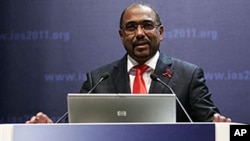
Scientists attending an international AIDS conference in Rome say striking advances have recently been made in prevention and now there is a need to push ahead towards a vaccine to combat this global pandemic.
After four days of discussions at the conference, thousands of scientists called for a greater push in using treatment as prevention in the fight against HIV.
Treatment as prevention will mean putting significantly more people on antiretroviral (ARVs) drugs earlier; at present, 15 million people are estimated to need ARVs - only 6.6 million have access to them.
Many of the scientists said, that with no definitive cure for HIV infection, preventing the virus must become a priority through 2015 and this will require the allocation of adequate economic resources.
Michel Sidibe’, Executive Director of UNAIDS, says there are 9 million people who could benefit from therapy and are not getting it.
"Inaction will cost a million deaths. Inaction will cost 400,000 babies born every year with HIV/AIDS. Inaction will cost certainly 2 million new infections every year and 5,000 deaths every day," said Sidibe’.
More than 34 million people in the world live with HIV. The hardest hit region in the world is sub-Saharan Africa, which experiences nearly 2 million new cases every year and where more women are infected than men.
Doctor Anthony Fauci directs the National Institute of Allergy and Infectious Diseases.
"The two major challenges is the need to develop a vaccine, because even though we have very good tools for prevention, the really important next goal would be a vaccine and finally a cure," said Fauci. "This is going to be difficult to do but there has been some indication that it would at least be feasible."
Scientists say there must be combined policies of prevention, adequate socio-health assistance and access to drugs. They also say there must be policies aimed at removing stigma and discrimination to which people with HIV are often subjected, particularly in the workplace.
AIDS Conference Urges Treatment As Prevention