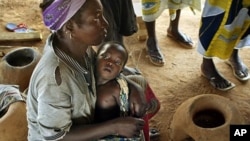
The International Organization for Migration reports that an estimated 450,000 people are displaced by the growing unrest in Ivory Coast. IOM says most are displaced within the country, but tens of thousands have fled to neighboring countries.
The International Organization for Migration is urging the international community to re-focus some of its attention from the crisis in Libya onto the situation in Ivory Coast, which is rapidly deteriorating.
IOM spokeswoman Jemini Pandya says it is becoming increasingly more difficult to provide humanitarian assistance to the hundreds of thousands of displaced.
She notes that until Tuesday, IOM was the only aid agency still operating in Douekoue and Guiglo in western Ivory Coast.
“As of this morning, our international staff have had to be evacuated from Douekoue and Guiglo because of the security situation," said Pandya. "It still means that we have a national presence on the ground. But, this means that our capacity to be able to assist is going to be reduced. In addition, the conditions are rapidly deteriorating in the north and the west of the country, where water and electricity supplies have been cut and are seriously affecting the people, particularly for those in the camps.”
Pandya says armed groups in the region reportedly are terrorizing the population. She says this is forcing local inhabitants and migrant communities to seek refuge in the nearby forests.
“What is clear to us is that there are several reasons why people are fleeing their homes in this part of the country," she added. "Unfortunately, the information, because of the security situation means that we are getting it in piecemeal fashion, which makes it very difficult for us to have an overall picture. It is simple enough to say that it is essentially confusion and anarchy gaining the upper hand in the area, especially now that there is virtually no humanitarian access.”
Meanwhile, the U.N. refugee agency reports the number of Ivorians fleeing into eastern Liberia also has risen dramatically. The agency so far has registered some 75,000 refugees, of whom around half have arrived over the last two weeks.
The agency says reports from the government and other aid agencies indicate another 7,000 Ivorians have arrived in Liberia, bringing the total number of refugees to more than 80,000.
Approximately 380,000 others are displaced within Ivory Coast, including up to 300,000 forced from their homes in the Abobo district of the commercial capital, Abidjan.
IOM: Alarming Increase in Displacement in Ivory Coast