



Not all non-native species are created equal, says ecologist Mark Davis. He wants to do away with the popular view that divides the natural world into two opposing camps - native species and non-native species.
In an essay in the journal Nature, the Macalester College biology professor joins 18 other scientists to argue that action to protect ecosystems should be based on species impact and not species origin.
He urges conservation managers to order their priorities around how non-native species impact other species, human health, waterways and the economy.
“What we should focus on is what is the species doing?" he says. "What are its functions within the community and then (decide) to keep or not." In some cases those would be non-native species and in other cases, not native.
Davis and his colleagues do not deny that real problem species exist. “Some of them are native. Some are non-native. The ones that are non-native we should try to keep them out from countries in which they are not currently inhabiting. But once the species are in, you often have to learn to live with them.”
But that’s not always an option. Jennifer Nalbone is director of Invasive Species Navigation with Great Lakes United. The U.S. Canada coalition is dedicated to keeping aggressive invaders out of the lakes, and controlling those already there.
She points to the on-going struggle with zebra mussels. They arrived in the mid-1980’s in ship ballast water from the Black and Caspian Sea region, and have become a major threat to wildlife, navigation, and boating. “You could look back in history to the (19)80s and (19)90s in Monroe, Michigan when a power plant and the city’s water supply were shut down because its intake pipes were clogged with zebra mussels. Mussels contributed to a valve problem in the 1990s at the Nine Mile Nuclear Power plant in Lake Ontario.”
Each year zebra mussels cost the region between $100 million to $200 million.
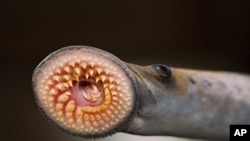
Sea Lamprey is an eel-like fish native to the U.S. Atlantic coast that is also now found in the Great Lakes. Twenty million dollars are spent each year to fight this parasitic pest. Nalbone says with that in mind, the focus is on stopping the next big invader - Asian Carp. “These are burdens that the Great Lakes are struggling under right now and we don’t want another one in the region.”
Yet, she says, the Asian Carp, which can grow up to a meter long and weigh as much as 45 kilograms, is making its way north. The voracious eater, imported by Midwestern fish farmers in the 1970s, could end up devastating the region’s 7 billion dollar fishing industry.
All that is holding it back now is an electric fence. Nalbone says keeping carp from Chicago is high on her list.
However, not all non-native species pose such a threat.
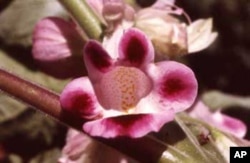
Take the Devil’s Claw, a Mexican herb that today grows wild in Australia. The campaign to eradicate the weed has mobilized hundreds of volunteers. Despite those efforts, Devil’s Claw persists and Davis says there is little evidence that the ecosystem is at risk.
“This tendency to jump to conclusions, the assumption of negative impacts, that has cost us a lot of money and resources directed to areas where there really wasn’t a lot of harm which meant they were not available to be used on species which were really causing harm.”
Another example is tamarisk. The shrub was imported from Eurasia and Africa in the mid-1800s to control soil erosion in the American Southwest, but it spread to river systems across the West and up mountainsides, to elevations of 2,000 meters.
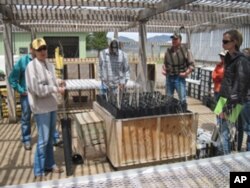
While millions of dollars have been spent to suppress tamarisk, Davis, says the shrubs are not all bad.
“In fact (they) are now providing important habitat for some of the wildlife there, and if we eradicate them, we are actually making things worse.”
Stacey Kolegas, director of the Tamarisk Coalition, says tamarisk control is part of a coordinated plan for river health. She agrees with Davis that conservation must be science-based and site specific.
“A community that has monoculture of tamarisk running through their downtown right where their river runs is going to be managing tamarisk for fire mitigation, whereas a wildlife area is going to be managing tamarisk because they want to increase the berry producing shrubs on their land to enhance wildlife habitat.”