



News / Middle East

Anti-Government Protests Spread in Arab Countries
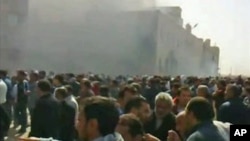
A crowd gathers as smoke billows from a building purported to be the internal security headquarters in Libya's second city of Benghazi in this video still grab, February 20, 2011
TEXT SIZE - +

Security forces in Libya have opened fire again on anti-government protesters, while thousands of people have started protesting in Morocco, and people in Bahrain and Yemen continue to demonstrate for political reform.

In Libya's second-largest city, Benghazi, witnesses said security forces shot at mourners attending a funeral Sunday for protesters killed the day before.  The U.S.-based group Human Rights Watch has raised Libya's death toll during five days of unrest to 173.

Several thousand anti-government activists in Morocco rallied in Rabat Sunday to demand political reforms limiting the power of King Mohammed. Marchers shouted slogans demanding a new constitution, greater economic opportunities and a crackdown on corruption.

Thousands of Tunisians poured into the streets of their capital to demand the resignation of the interim government. The caretaker government has promised elections within six months, but has yet to set a date.   

In Bahrain, thousands of pro-democracy activists have re-established a tent camp in a main square of their capital as they consider an offer of dialogue from the minority Sunni rulers of the small Gulf kingdom.

Bahraini youth activists rejected that appeal Sunday and used a Facebook page to call for a general strike to press their demands.

In Jordan Sunday, King Abdullah called for "real" and "quick" political reforms to give the public a greater role in government amid popular discontent. Jordanians have been demonstrating since January for political and economic changes, with street protests that resemble the uprisings elsewhere in the Arab world.

In Yemen, more than 1,000 students demonstrated Sunday in the capital, Sana'a, to press for the ouster of President Ali Abdullah Saleh, while a smaller group of the president's supporters held a pro-government demonstration nearby.

NEW: Follow our Middle East reports on Twitter
and discuss them on our Facebook page.

You May Like

Experts Weigh In on Challenges of Closing Guantanamo Prison

Former chief military prosecutor at Guantanamo delivers petition to White House with more than 370,000 signatures, demanding facility be closed down immediately More

Karzai to Discuss Enhancing Defense Ties with India

Afghanistan looking for more military aid as it prepares for withdrawal of NATO forces by next year More

India, China Pledge to Overcome Border Tensions

Indian prime minister and Chinese premier attempt to move past tense standoff in the Himalayas during Delhi talks More

Burmese President Opens US Visit with VOA Town Hall Meeting

Ahead of his meeting with President Obama Monday, Thein Sein answered questions on human rights and economic development in his country More

This forum has been closed.
Comments
     
There are no comments in this forum. Be first and add one

Featured Videos

Your JavaScript is turned off or you have an old version of Adobe's Flash Player. Get the latest Flash player.
Video

Video US Oil Surge Could Impact Mideast Geopolitics

The United States will account for a third of new oil supplies over the next five years, and will become energy self-sufficient in 20 years, according to a new report by the Paris-based International Energy Agency (IEA). Although U.S. oil imports from Arab Gulf countries increased last year, analysts predict the U.S. will lose its dependence on Middle East imports, which is expected to have a huge impact on international relations and the balance of power. VOA's Henry Ridgewell reports.