



News / Africa

Arab League Opposes Foreign Intervention in Libya

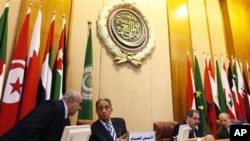
Arab League Secretary General Amr Moussa, second left, and Iraqi Foreign Minister Hoshyar Zebari, second right, head an Arab League foreign ministers meeting at Arab League headquarters in Cairo, Egypt, March 2, 2011
TEXT SIZE - +

Arab League diplomats say the organization would oppose any form of foreign intervention in Libya.

The diplomats commented Wednesday in Cairo, where the 22-member body is meeting to discuss unrest in the country.

World condemnation is mounting against the Libyan government and its attacks on civilians as a rebel protest widens. As the international community is gearing up relief efforts to areas in Libya held by anti-government forces, world powers are putting sanctions into place. And they are debating the possible enforcement of a no-fly zone against the Libyan military.

On Tuesday, the 192-member General Assembly voted by consensus to suspend Libya from the Human Rights Council for committing "gross and systematic violations of human rights" in suppressing an uprising against autocratic leader Moammar Gadhafi. The assembly also expressed "deep concern" about the human rights situation in Libya.

The United States praised the unprecedented move and said it serves as a warning to other nations who attack their own citizens.

U.S. Secretary of State Hillary Clinton said the General Assembly decision showed that "governments who turn their guns on their own people have no place" in the 47-member rights body, which is based in Geneva.

Libya is the first nation to be suspended since the Council was formed in 2006. The resolution was co-sponsored by 72 nations, mainly Arab and African.

The action does not permanently remove Libya from the council, but prevents it from participating until the General Assembly determines whether to restore the country to full status.

Some information for this report was provided by AP and AFP.

Follow our Middle East reports on Twitter
and discuss them on our Facebook page.

You May Like

Experts Weigh In on Challenges of Closing Guantanamo Prison

Former chief military prosecutor at Guantanamo delivers petition to White House with more than 370,000 signatures, demanding facility be closed down immediately More

Karzai to Discuss Enhancing Defense Ties with India

Afghanistan looking for more military aid as it prepares for withdrawal of NATO forces by next year More

India, China Pledge to Overcome Border Tensions

Indian prime minister and Chinese premier attempt to move past tense standoff in the Himalayas during Delhi talks More

Burmese President Opens US Visit with VOA Town Hall Meeting

Ahead of his meeting with President Obama Monday, Thein Sein answered questions on human rights and economic development in his country More

This forum has been closed.
Comments
     
There are no comments in this forum. Be first and add one

Featured Videos

Your JavaScript is turned off or you have an old version of Adobe's Flash Player. Get the latest Flash player.
Video

Video US Oil Surge Could Impact Mideast Geopolitics

The United States will account for a third of new oil supplies over the next five years, and will become energy self-sufficient in 20 years, according to a new report by the Paris-based International Energy Agency (IEA). Although U.S. oil imports from Arab Gulf countries increased last year, analysts predict the U.S. will lose its dependence on Middle East imports, which is expected to have a huge impact on international relations and the balance of power. VOA's Henry Ridgewell reports.