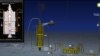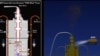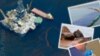



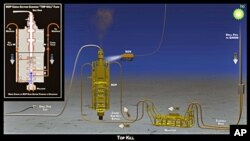
BP oil company is pumping heavy mud into a leaking oil well in the Gulf of Mexico, but officials say it is very early into the procedure, known as "top kill,". Company officials say it may be two days before they know if the technique is successful.
BP crews began pumping heavy mud late Wednesday from a set of surface vessels about 80 kilometers off the shore of Louisiana. The mud flows down through tubes to the well head, 1.5 kilometers below the surface, and pushes against oil that is escaping from the well. The goal is to reverse the flow of oil, enabling crews to pump concrete to seal off the well.
Several hours into the work, BP's chief operating officer, Doug Suttles, said the job was proceeding as planned. He said crews had pumped 7,000 barrels of heavy mud so far, and would continue pumping until they regain control of the well.
"We expect these activities to be complete sometime over the next 24 hours, but I would stress this could take longer," he said. "We are going to make sure we do the job right and thoroughly."
BP has deployed several large vessels and a fleet of remote controlled submarines to help stop the oil leak. A video feed from one of the submarines showed the color of the material escaping the well head changed shortly after the so-called top kill procedure began. Suttles said the video suggested that mud was flowing into the well as planned, but it was too early to know more.
"The way we will know the job has been successful is when we monitor the well and recognize that it is not flowing, it is no longer flowing. And we will be doing that by monitoring the pressure and the visual observations, but most importantly the pressure data which we are monitoring continuously," said Suttles.
Clean-up crews are continuing the massive task of skimming oil from water in the Gulf of Mexico and scraping oil off beaches in Louisiana. Doug Suttles said so far the oil spill had hit about 160 kilometers of U.S. coastline and 12 hectares of marshland.
The federal coordinator for the spill, Coast Guard Rear Admiral Mary Landry said she is hopeful about shutting off the oil leak, but clean-up work poses a long-term challenge.
"Even if declared successful, I want to emphasize we will still be here fighting the spill response, making sure this region is made whole, and its people are made whole," said Landry.
U.S. officials have closed 20 percent of federal fishing grounds in the Gulf of Mexico as a result of the spill. Fishermen in Louisiana and other affected areas are pressing BP to compensate them for the losses to their business.