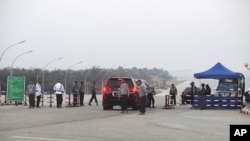



Burma has convened a session of parliament for the first time in more than 20 years. The government says it is a move toward democracy but democracy activists say the military is still in charge.
The opening Monday, of the first session of parliament since 1988, followed the controversial November elections.
Legislators gathered in the remote capital, Naypyitaw, under tight security.
The government says the parliament is a key part of a transition to civilian rule.
But critics say the military used election fraud and intimidation to stack the parliament with its supporters and retain power.
Debbie Stothard, with the Alternative ASEAN Network on Burma, says the parliament is a military façade to try to gain credibility with the international community.
"I think the whole range of rules and laws restricting parliamentarians from voicing their opinion or asking questions and the rules that actually impose a year's jail sentence on members of the public who enter the parliament without permission, it's pretty clear that this is a showcase parliament being held hostage by the military authorities," Stothard said.
The military-drafted constitution reserves a quarter of all seats for the army, even before the elections. The military’s supporters won almost 80 percent of the remaining seats.
The military also has given itself immunity from prosecution, closed parliamentary procedures from the public, and announced strict rules for raising questions that prevent any debate over issues it does not want discussed.
The National League for Democracy, the biggest opposition party, was disbanded for boycotting the election and refusing to expel leader Aung San Suu Kyi.
The NLD won Burma’s last election in 1990 but the military never allowed it to take power and kept Aung San Suu Kyi locked up for most of the past two decades.
She was freed from house arrest after the elections and has been working with members of her party since then.
Smaller pro-democracy and ethnic minority parties contested the elections but won only a handful of seats.
Still, some regional political analysts say the parliament could offer some hope for change as new elements of society are brought into politics.
The parliament’s procedures are not clear but members are expected to choose a new president and vice presidents.
The military overthrew Burma’s only multi-party democracy in 1962 and has ruled the country with an iron fist ever since.
Burma Convenes Parliament for First Time in Two Decades