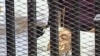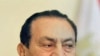



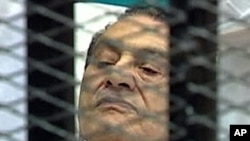
Egypt's former president Hosni Mubarak appeared in a courtroom cage Wednesday charged with the murder of anti-government protesters and corruption. The trial, unprecedented in Egyptian history, is riveting the nation.
Mubarak was wheeled into the temporary courtroom on a hospital gurney, taking his place next to his two sons, Gamal and Alaa, former interior minister Habib al-Adly and six ex-security officials.
Video clip of Mubarak hearing
As the trial got underway, the judge asked Mubarak if he heard the charges against him, which include ordering the killing of protesters during an 18-day uprising earlier this year. The former leader said he did, adding he denied them categorically. Along with his sons, he is also accused of corruption. The younger Mubaraks also denied the charges.
If found guilty, the defendants face the possibility of the death penalty. Mubarak appeared alert as he lay on the stretcher, less drawn than when last seen publicly in a defiant speech in February. The 83-year-old was flown to the capital early Wednesday from Sharm el-Sheikh, where aides say he has been in poor health since stepping down in the face of the protests.
More than 800 people were killed during the uprising.
Egyptians react
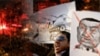
Outside the court, where a giant screen relayed the image of the caged defendants, the mother of Mohamed Soliman Tawfik, a university student killed in the protests, said she was relieved.
She said her child was a good boy, raised properly, unlike the sons of Hosni Mubarak. Holding a picture of her dead son, she says it is enough for her to see the former president in the cage.
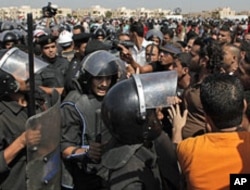
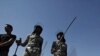
Nearby, riot police, who clashed briefly with Mubarak supporters earlier in the day, seemed as intent on watching the image of their former president behind bars as they were on the crowd. Among those outside the court, a makeshift affair in a policy academy that once bore Mubarak's name was newspaper editor Rania Al Malky. She said if someone had predicted this last year, she would have thought they were crazy.
"I would have said they were are living in Mars or Neptune or somewhere outside Earth because this was unthinkable. I think what happened is a miracle and the way everything has happened since the fist day, since January 25th, has been a miracle," she said.
Mubarak was the second Arab leader forced from power during the popular, anti-government uprisings that have rocked North Africa and the Middle East this year and the first to come to trial. Those who support the man who ruled Egypt for nearly 30 years spoke out in his defense, with one man blaming the media and foreign countries, including the United States and Israel, for all that has happened.
"I always support him and millions of Egyptians support Mubarak," he said. "I believe this is a conspiracy on Egypt, a well done conspiracy but, inshaalla, with God's will we are going to defeat this conspiracy in time. "
But such people seemed in the minority. Across the capital, Egyptians sat grouped around televisions set up in cafes and doorways, watching the historic trial playing out before their eyes. The case against Mubarak and his sons is set to resume on August 15. The others are set to appear in court again on Thursday.