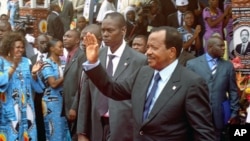
Leaders of Cameroon's Social Democratic Front (SDF) want results from Sunday's presidential election annulled on account of widespread irregularities and what they describe as fraud.
The results are also being challenged by members of the opposition Manidem party, but President Paul Biya appears set to extend his 29 years in office anyway.
Biya, who has ruled Cameroon since 1982, eliminated constitutionally mandated term limits in 2008 so he could run for re-election this year, a move that sparked street protests in which at least 40 people were killed.
Biya's principal challenger is SDF leader John Fru Ndi, whose campaign manager, Joshua Osih, asked Supreme Court officials to nullify the results despite claims Fru Ndi is leading in unofficial returns.
"Our candidate has made it abundantly clear that he would need a legitimate mandate of the people, not a mandate with so much confusion and fraud," said Osih, explaining voter cards were withheld in opposition strongholds and electoral totals from some districts exceeded the number of registered voters. "It disenfranchises Cameroonians from having a real president-elect. ... It is our republican duty to take that to court."
According to French foreign minister Alain Juppe, who based his assessment of the election on observations of the Commonwealth Secretariat and the Organization of the Francophonie, votes were cast and tallied under "acceptable conditions."
United Nations Secretary General Ban Ki-moon praised the "peaceful manner" in which the election took place and called on all political actors to "use established legal channels to resolve electoral disputes."
President Biya has asked for patience, explaining that despite “imperfections” in the vote his government has no intention of cheating.
Eight Supreme Court petitions were file to challenge Biya's last election in 2004, but none were upheld. Recognizing that new petitions will likely be dismissed as well, Oshi emphasized the importance of filing them anyway.
"We are in a political process, and political decisions are being made, and the consequences of political acts have to be taken as well," said Osih. "Right now we are in the consequences of a wrongly-held election, of a poorly-managed election, and consequences of electoral fraud which has nothing to do with the position of a political party."
Cameroon's Presidential Vote Tally Challenged