



News / USA

Could More Realistic Flight Training Prevent Some Crashes?

Authorities think so, and they've designed simulators that shake, rattle, and roll

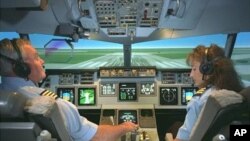
U.S. space agency simulators help prepare airplane pilots for crisis situations. But critics say they don't adequately replicate out-of-control situations.

Multimedia

Audio
TEXT SIZE - +
Ted Landphair

In the mock-ups of airplane cockpits called flight simulators, pilots learn or perfect take-offs, landings, and how to quickly employ sophisticated electronic instruments in today's jet aircraft.

What they don't learn so well, apparently, is how to deal with sudden, potentially catastrophic emergencies.

Computer screens can simulate spins and twists and free falls, but until recently they have not been able to reproduce the yawing and shaking that can suddenly and ominously confront and panic a pilot.
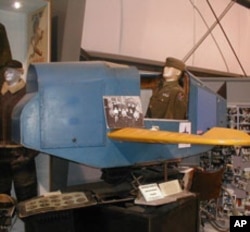
The U.S. Army Air Force used a crude simulator, bolted to a platform that bounced and shook, to train pilots during World War II. This one is preserved in a museum.

The aircraft company Boeing calculates that between 1999 and 2008, almost 2,000 people died worldwide in crashes in which pilots lost control of big aircraft that might have been saved.

A recent and heavily studied example occurred in February 2009, when pilots of a turboprop encountered icing conditions as they approached Buffalo, New York, in a snowstorm. When the plane began to shake and stall, the lead pilot jerked the controls to turn the wings upward, when turning the plane's nose downward could have saved it. It crashed, killing all 49 people aboard and a man on the ground.

The USA Today newspaper reports that NASA researchers and private companies have developed simulators that realistically duplicate the shaking, rollovers and final, silent dives that occur when a big plane stalls.

Some flight simulators make use of cameras and terrain mock-ups. The terrain can even appear dead ahead in a free-fall crisis replication.

There's no assurance that such a simulator session would enable every pilot who confronts a real emergency to gain control of a wildly pitching, falling aircraft.  

But Michael Barr, who teaches aviation safety at the University of Southern California, told the newspaper that pilots should not be given licenses until they have shown they can successfully pull their mammoth airplanes out of violent, rocking and shaking calamities and stalls.  

Even if they are make-believe.

You May Like

Video Egypt's Conservative Rural Vote Appears Split

Early speculation after the first two-day round is showing a race too close to call More

NATO Continues Plans for Missile Defense

While Afghanistan dominated talks in Chicago, member states also reaffirmed their commitment to ballistic-missile defense More

War Declared on Invasive Leaping Asian Carp

When Asian carp were first imported decades ago, few foresaw their environmental impact. More

This forum has been closed.
Comments
     
There are no comments in this forum. Be first and add one
The Student Union

It’s Not Too Late To Get Admission for the Fall

More

An ‘A’ Won’t Get You a Career, But a Good Education Might

More

Here’s Exactly What a College Application Form Looks Like

More

Travel Tips for International Students in America

More

Events for International Students: May 21-25

More
Read more
Ted Landphair

The Golden Gate Bridge — A Diamond Over the Rough

More

The Empire State Building: No. 2 in New York, 1 in Our Hearts

More

On California’s Royal Road, Traces of ‘New Spain’

More

Heart of the Heartland

More

So You Want to be Famous!

More
Read more