




In September 2000, the United Nations approved the Millennium Declaration. It set the stage for the Millennium Development Goals, which are due to be achieved in 2015. But have the MDGs brought meaningful results or are they just a first step?
The goals aim to reduce poverty, hunger and disease, while improving health, education, gender equality and the environment.
“There’s a debate that’s brewing about what happens after 2015 when these targets come to their natural end. Should there be more targets? Should you get really ambitious about ending world poverty in, say, 2030 or something like that? And we thought it might be useful to take a look at what’s actually been achieved over the last 10 years or so and ask a series of questions about the impact of the MDGs,” said Andy Sumner has evaluated their effectiveness in his paper More Money or More Development: What Have the Millennium Development Goals Achieved?
Sumner is a fellow in vulnerability and poverty reduction at the Institute of Development Studies at the University of Sussex.
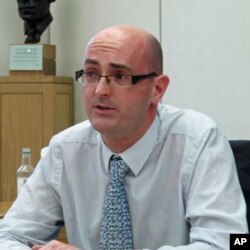
He said, “We wanted to ask if the MDGs had changed the nature of the debate in terms of, had they shifted priorities, at least in policy discussions. We wanted to ask, had the goals led to greater mobilization of resources, so more money for development. And we wanted to see if they actually led to changes in policy and changes in outcome in terms of has poverty reduction been faster over the last 10 years compared to previous periods. Could you say that the MDGs were part of that success story?”
Toothless
That’s a lot to ask, he said, of what he calls a “legally toothless document
“Actually, the MDGs themselves, these U.N. goals, were never signed up to by heads of state. What was signed by heads of state was a declaration called the Millennium Declaration in 2000, which the targets were then drawn out of. Toothless in the sense that if they’re not met, no one’s really accountable for that. And maybe that’s a question to put forward if there’s another set of international goals on reducing poverty,” he said.
Following the declaration, many reports were issued estimating costs and proposing policy changes. Sumner said this suggested, at least, a “widespread hope that the MDGs could make a real difference in speeding development progress.”
“What we found was rather a kind of mixed picture. I think it’s fair to say the MDGs changed the nature of the debate in the sense that they made global poverty reduction something that was mentioned at many G8 summits, for example, but less so at the G20 since the financial crisis. So clearly they moved poverty reduction and social spending and health and education very much onto the center ground, where perhaps in the past, they hadn’t been quite so central, those kind of social issues,” he said.
It’s also likely,” he said, “the Millennium Development Goals led to more money being spent in terms of aid.
Differing viewpoints
But judging their effectiveness can depend on whether you take a broad or narrow view. Sumner said the original intention was that they be global goals.
“So, do you judge these things at a global level? So, for example, of the seven key U.N. poverty goals here, three of them are on track to be met and three of them are not too badly off-track. One is very off-track, maternal mortality. No one’s quite sure if the data’s meaningful. There’s a real area of contention about the data for maternal mortality. But if you judge it at country level, then things have been largely helped by massive progress in China, for example, and other large countries. It comes down to how you judge these things and of course that was never clear at the outset,” he said.
He added the goal to cut poverty in half by 2015 would suggest there’s still some unfinished business.
“What might you achieve by say 2030? We’re trying to assess what might be reasonable for 2030. And we think it’s not out of the question that certain aspects of extreme poverty could be eradicated by 2030. So the MDGs, the Millennium Development Goals, were the kind of first stage of getting halfway. And then you might want to aspire to end extreme poverty by 2030 and that might be reasonable,” he said.
Sumner said there’s a symbolic value in the world saying it cares enough about poverty to set goals to reduce it. In fact, he says, it may be one of the few areas where there’s widespread international agreement. The question now is what happens after 2015? Will updated goals be proposed to follow-up on the Millennium Development Goals.