



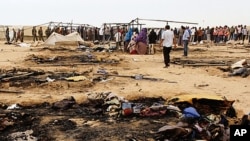
A human rights group says Tunisia must do more to protect migrant workers who fled the violence in neighboring Libya.
Human Rights Watch (HRW) says there are about 3,000 foreign nationals living in the camps, mostly from Somalia, Eritrea, Sudan and Ethiopia. Some, it said, have been the targets of violence.
“They’re being held in camps along the Libyan border and it’s an enormous strain on the Tunisian economy at a time when Tunisia is dealing with a political transition,” said Eric Goldstein, deputy director for the Mideast and North Africa for HRW.
Tensions
“Overall,” he said, “reception has been good. But lately tensions have been building. The residents of these camps want to be re-settled in other countries. Many of them are asylum seekers. They do not wish to be repatriated.”
Clashes have occurred between migrants and local Tunisians. HRW said local residents have entered some camps and attacked the migrants.
“The army has not been effective in stopping this violence. Some of the refugees accuse the army of being involved in the violence. There have been six people from [sub-Saharan] Africa who were killed in violent situations inside the Choucha camp over the last two months.”
This area of Tunisia is a main route for the flow of goods to and from Libya, and locals rely on it for their livelihoods.
“The conflict has disrupted that. And at one point the migrants who are sheltered there [blocked] the road in protest to demand a quicker resettlement to Western countries. The residents who profit from this trade grew angry. They invaded the camp. And there were also conflicts between some of the nationalities within the camps. The Tunisian army has to get on top of this situation, has to provide protection to these vulnerable people.”
HRW also wants international aid organizations to do more to help the displaced migrants in Tunisia.
Visited the camp
HRW staffers visited the Choucha camp between June 7 and 10 and had full access.
“Goldstein said, “We were able to talk to a colonel in the Tunisian army, as well as to many refugees and migrants within the camps and were not interfered with in our work.”