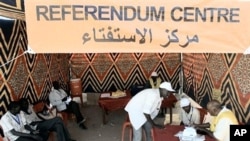



The Southern Sudan Referendum Commission announced it will reopen bidding on the printing of ballot papers for the January 9 referendum on southern independence. In the April general elections, the use of the national currency printing company caused a great deal of controversy. The requirements for bidding were changed to make it easier for Sudanese companies to try for the contract.
With 41 days left until Southern Sudanese vote on whether to become an independent country, the ballot papers for the vote still have not been printed and no company has been hired to start designing and printing the ballots.
In the capital of the semi-autonomous south, the chairman of the southern referendum bureau, Justice Chan Reec, said the bidding on the contract was extended to Sunday, December 5.
Chan said that the delay in printing should not lead to a delay in the referendum.
"Our partners have assured us, if nothing else happens, the bids will be opened on Sunday, they will be in a position to place their orders for the production and it will come on time," said Chan.
The requests for bids required companies to have $1 million in reserves and an international reputation for producing ballots.
"The way the conditions were phrased made it almost impossible for a Sudanese company to apply," said Chan.
One of the major criticisms of the flawed April, 2010 general elections in Sudan came from confusing ballot papers that excluded some candidates. The registration materials were printed in South Africa, and Chan said the standards should be the same even though more local companies will be able to submit bids.
"We are hoping that it will be a foreign company with the sufficient capability to do the printing," added Chan.
Two weeks into voter registration in Sudan, and a little more than two million people have registered in the south. But only 56 percent of the registration centers have reported totals.
The numbers for registrants in the north are much lower, only about 23 percent of the southerners that were expected to register.
Registration was scheduled to end on December 1, but has been extended to the 8. The low turnout in the north, along with a steady flow of southerners leaving the north, a shortage of registration materials and the many people who still have not registered are the main reasons cited by officials.
The vote is scheduled to start January 9.
Delay in Ballot Printing for Sudan January Referendum