



The dilemma has been haunting the United States for decades. Do you prop up a regime that treats you favorably, even if that regime does not necessarily share your democratic principles? Or do you stand firm on your values, even if it means losing a partner or ally?
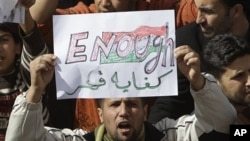
In the cases of Tunisia and Egypt, the United States opted for the former approach. Some say it paid for it dearly. They claim that not only did the U.S. sacrifice its own principles, it also ended up losing its partners and allies to popular revolts. Ironically, the revolts were about greater freedom and democracy – values, many believe, the U.S. should have supported in these countries all along. Others say that in propping up or tolerating some autocratic rulers, the U.S. is merely choosing between a known and an unknown, between a relationship it can, to some extent, control and one over which it might have no grip.
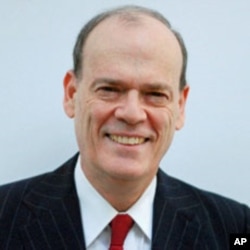
VOA’s Susan Yackee spoke about this dilemma and the Obama administration’s handling of the recent turmoil in North Africa and the Middle East with Michael Mandelbaum, a professor of American foreign policy at the Johns Hopkins University School of Advanced International Studies (SAIS).
|
Listen to our interview with Michael Mandelbaum:
|
Mandelbaum: The American government’s response has been confused and conflicted but that is, I think, appropriate because the situation in that part of the world is confusing and the United States does face, in some of these countries anyway, a conflict between its values and its interests.
Our American values would have a support movement against dictators everywhere since the United States stands for and has stood for, since the beginning and the founding of the republic, democracy. We founded our country in opposition to what we regarded as dictatorship.
On the other hand, in number of these countries the ruling autocrats carry out policies friendly and favorable to the United States, and there is legitimate fear that if they are swept from power, the new regime will not follow these pro-American and pro-Western policies and may be even more dictatorial than the old regime. So this is very difficult to reign for the American government and would be for any Administration, Republican or Democrat.
Yackee: We have so many areas of conflict right now. Is the Administration going to have to choose a reaction for a particular nation?
Mandelbaum: Well, obviously the Administration will tailor its response to the particulars of each individual country. But in many of these countries, as I say, the Administration and the country faces a conflict between our interests and our values.
But this is made slightly easier, the problem of the policy making is made slightly easier by the fact that the United States does not have a lot of leverage in a lot of these countries. In most of these countries, we do have some leverage in Egypt because of our aid package that goes mainly to the army.
But we really don’t have any leverage in Libya, unless we were to decide to use military force which, I think, is highly unlikely although I have heard calls in recent days for the international enforcement of no fly-zone over Tripoli so that Gahdafi cannot bomb his own citizens….
Yackee: Do you have any advice for the Administration?
Mandelbaum: My advice is to watch each event closely to keep foremost in their mind American interests, and I have two specific policy recommendations.
One of them -- and this is presented in the New York Times by their foreign affairs columnist Thomas Friedman -- is to do something about our dependence on oil by raising the price of gasoline. The real danger for the long term for the United States is that instability in the oil exporting part of the world -- and it is that the part of the world – will send the price of oil worldwide sky-high, plunging us and other countries back into deep recessions. And the way to avoid that is to reduce our dependence on oil, and the way to reduce our dependence is to impose higher gasoline tax. I make this proposal in my recent book “The Frugal Super Power: America’s Global Leadership in a Cash-Strapped Era.”
And the second thing, I think the administration and we all should keep very much in mind is the proper definition of democracy. Democracy does not mean just elections. It also means the protection of liberty, the protection of political liberty, that is civil rights, the protection of economic liberty, that is private property and the protection of religious liberty, that is freedom of worship.
So although we can cheer on dissidents and protesters against dictatorship, we have to remember that what we want for these countries is not simply free elections, but also the kind of protection of liberty that requires institutions that, unfortunately, take a long time to build.