


The Republican U.S. presidential contenders hold their next debate Tuesday in the early primary state of New Hampshire. The latest polls show former Massachusetts governor Mitt Romney back in the lead over his main rival, Texas Governor Rick Perry, and also surging support for little-known Georgia businessman Herman Cain.
The Republican presidential candidates are sure to be asked about the nationwide protests targeting corporate greed and excesses on Wall Street, demonstrations that have caught the attention of President Barack Obama.
"So, yes, I think people are frustrated and the protestors are giving voice to a more broad-based frustration about how our financial system works," said Obama.
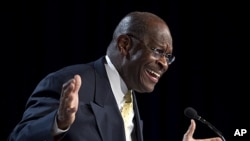
Republican contender Herman Cain took issue with that view in an interview with The Wall Street Journal.
"Don't blame Wall Street," said Cain. "Don't blame the big banks. If you don't have a job and you are not rich, blame yourself!"
The little-known Georgia businessman is surging in the latest polls, finishing first in one and second in two others including the Quinnipiac survey, says pollster Peter Brown.
"Herman Cain is a favorite of many of the Tea Party types in the Republican coalition. He is obviously a strong speaker and he has a business background. He has had a good month," noted Brown.
Former Massachusetts governor Mitt Romney is back on top in most recent surveys and continues to emphasize his background in business, as he did during this campaign stop in Florida.
"I will get Washington right because that's what I do. I will fix it. I will get it on track again," said Romney.
Romney and Cain have benefited from a drop in support for Texas Governor Rick Perry, who hopes to get back on track in the next debate.
"There is a consensus that he did not do well in the debates over the last month and he was beaten by Mr. Cain in a straw poll at the Florida Republican convention, which was something of a surprise," Brown added.
President Obama did not fare well in the latest Quinnipiac poll either. Of those asked, 55 percent said they disapproved of his performance as president, an all-time low for that poll.
"The bad news for President Obama is that even his people think the economy is not going to get much better a year from now," Brown explained. "And that is what the voters are interested in. They are interested in someone who can fix the economy and make their lives better."
The Republican presidential field now appears set after former Alaska governor Sarah Palin and New Jersey Governor Chris Christie each announced they would not be joining the race.
Cain Surges in Republican Presidential Race
- By Jim Malone