



News / Middle East

Iran Rejects New Sanctions by EU

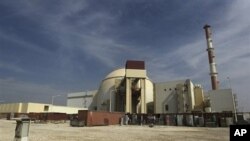
The reactor building of the Bushehr nuclear power plant is seen, just outside the southern city of Bushehr, Iran (File Photo)
TEXT SIZE - +

Iran has rejected the European Union's plan to extend sanctions against Iranian entities over its disputed nuclear program.

Iranian foreign ministry spokesman Ramin Mehmanparast said the EU is acting illogically by acting on sanctions while at the same time calling for Tehran to resume talks with major powers on nuclear issues.

Mehmanparast said Tuesday the additional EU sanctions show a "contradiction" between the actions and words of European and other Western nations.

The 27-nation EU bloc said Monday it was imposing travel bans and asset freezes on an additional 100 Iranian entities and several Iranian individuals, due to concerns about Iran's nuclear program.  The United States welcomed the EU decision.

Western nations suspect Iran is developing nuclear weapons under cover of a civilian energy program, a charge Tehran denies.

U.S. and EU authorities have imposed a series of unilateral sanctions in recent years on Iranian companies and individuals suspected of involvement in the proliferation of weapons and military technology.

Iran last engaged in nuclear talks with Britain, China, France, Germany, Russia and the United States in January, but the dialogue ended with no sign of progress.

Separately, China says it will study an Iranian offer for Chinese experts to inspect Iranian nuclear facilities. Iran's foreign minister Ali Akbar Salehi made the offer to his Chinese counterpart Yang Jiechi in Beijing on Monday.

A Chinese Foreign Ministry spokeswoman says Beijing hopes Iran and the six world powers will resume talks as soon as possible. She also said Tuesday that China encourages Iran to improve cooperation with the U.N. nuclear agency.

Some information for this report was provided by AP, AFP and Reuters.

Follow our Middle East reports on Twitter
and discuss them on our Facebook page.

You May Like

Experts Weigh In on Challenges of Closing Guantanamo Prison

Former chief military prosecutor at Guantanamo delivers petition to White House with more than 370,000 signatures, demanding facility be closed down immediately More

Karzai to Discuss Enhancing Defense Ties with India

Afghanistan looking for more military aid as it prepares for withdrawal of NATO forces by next year More

India, China Pledge to Overcome Border Tensions

Indian prime minister and Chinese premier attempt to move past tense standoff in the Himalayas during Delhi talks More

Burmese President Opens US Visit with VOA Town Hall Meeting

Ahead of his meeting with President Obama Monday, Thein Sein answered questions on human rights and economic development in his country More

This forum has been closed.
Comments
     
There are no comments in this forum. Be first and add one

Featured Videos

Your JavaScript is turned off or you have an old version of Adobe's Flash Player. Get the latest Flash player.
Video

Video US Oil Surge Could Impact Mideast Geopolitics

The United States will account for a third of new oil supplies over the next five years, and will become energy self-sufficient in 20 years, according to a new report by the Paris-based International Energy Agency (IEA). Although U.S. oil imports from Arab Gulf countries increased last year, analysts predict the U.S. will lose its dependence on Middle East imports, which is expected to have a huge impact on international relations and the balance of power. VOA's Henry Ridgewell reports.