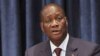



Ivory Coast President Alassane Ouattara says he will make sure human rights are respected across his country.
In an interview with VOA Friday, Mr. Ouattara said he would impose sanctions on any Ivorians who do not respect human rights. He also denied that former rebels still control a large swath of the country. He said he is "a man of peace" and the president of all Ivorians.
An Amnesty International report this week said hundreds of thousands of refugees are too afraid to return to their homes because they fear they will be attacked by forces allied with President Ouattara.
Mr. Ouattara spoke to VOA in Washington shortly after he and three other West African leaders met with U.S. President Barack Obama.
Mr. Ouattara said it was a "great meeting." He said Mr. Obama had expressed appreciation for what the African leaders are doing and said the African leaders had asked for economic support in developing their countries.
Also at the White House meeting were Benin President Boni Yayi, Niger President Mahamadou Issoufou, and Guinea President Alpha Conde.
In a statement to reporters, Mr. Obama said all four men can serve as "effective models for the continent," noting that they came to power in free and fair elections and had shown persistence despite "enormous challenges." He noted in Ivory Coast those challenges included forcing the previous president, Laurent Gbagbo, to respect the results of the internationally-certified elections.
At least 3,000 people were killed in post-election violence in Ivory Coast when President Gbagbo, in power since 2000, refused to accept his electoral defeat. Mr. Gbagbo was finally toppled and arrested April 11, after United Nations and French helicopters bombed the president's compound, where he was hiding.
Human rights groups accuse supporters of both Mr. Ouattara and Mr. Gbagbo of killing and injuring civilians in the battle for power. President Ouattara has promised justice for all victims of the violence, saying there will be no exceptions.
Ivory Coast President Vows to Enforce Human Rights