



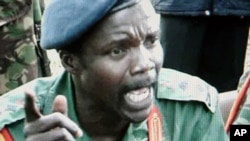
ADDIS ABABA - Four Central African nations are preparing to ratchet up the hunt for the fugitive outlaw Joseph Kony and members of his rebel Lord's Resistance Army. Military leaders are organizing a coordinated campaign to put an end to nearly three decades of LRA terror.
The defense ministers and army chiefs of Uganda, the Central African Republic and the Democratic Republic of Congo Tuesday discussed the rules of engagement for an offensive to stamp out the LRA. South Sudan is also involved in the effort, but its officials were said to be busy elsewhere and could not attend.
Officials say the military chiefs will ask the African Union and the United Nations to endorse a robust mandate for their campaign. AU Peace and Security Commissioner Ramtane Lamamra says the goal is to neutralize not just the self-proclaimed prophet Kony, but his entire band of 150 to 200 followers.
"Joseph Kony would be a good result of our concerted joint action but then you have to be sure you neutralize the whole organization," Lamamra said.
About 2,500 troops are already said to be engaged in the Kony manhunt. Lamamra says he expects that number to double as the campaign gains momentum.
"The target is 5,000 troops to be deployed in what we call the theater of operations, covers part of the territory of the DRC, the Central African Republic and South Sudan. But then you have troops from the countries themselves and troops from Uganda," Lamamra said.
Kony and his LRA have waged a 26-year reign of terror in Central Africa, attacking and looting villages, killing and kidnapping their inhabitants, and displacing millions of people from their homes.
Ugandan military commanders last month accused Sudan of helping the LRA, a charge the Khartoum government denied.
The United States designated the LRA a terrorist group in 2001. Last year, U.S. President Barack Obama dispatched 100 military advisers to Central Africa to work with the regional forces.
But the long hunt for Kony moved up the political agenda recently, following the online success of a video by a group campaigning for his capture.
At a U.S. Senate hearing last month, lawmakers signaled they would push to expand a State Department “Rewards for Justice” program to include Kony. Assistant Secretary of State for Africa Johnnie Carson told senators the United States is providing radios and cellphones to communities in the Congo as part of the campaign to bring Kony and his followers to justice.
Commissioner Lamamra told reporters the Peace and Security Council is slated to review the manhunt strategy next week and send it on for approval by the United Nations Security Council in June.
When asked whether he thought this intensified campaign would worry Kony, who has avoided capture for decades, Lamamra commented, "He has every reason to be scared."
The defense ministers and army chiefs of Uganda, the Central African Republic and the Democratic Republic of Congo Tuesday discussed the rules of engagement for an offensive to stamp out the LRA. South Sudan is also involved in the effort, but its officials were said to be busy elsewhere and could not attend.
Officials say the military chiefs will ask the African Union and the United Nations to endorse a robust mandate for their campaign. AU Peace and Security Commissioner Ramtane Lamamra says the goal is to neutralize not just the self-proclaimed prophet Kony, but his entire band of 150 to 200 followers.
"Joseph Kony would be a good result of our concerted joint action but then you have to be sure you neutralize the whole organization," Lamamra said.
About 2,500 troops are already said to be engaged in the Kony manhunt. Lamamra says he expects that number to double as the campaign gains momentum.
"The target is 5,000 troops to be deployed in what we call the theater of operations, covers part of the territory of the DRC, the Central African Republic and South Sudan. But then you have troops from the countries themselves and troops from Uganda," Lamamra said.
Kony and his LRA have waged a 26-year reign of terror in Central Africa, attacking and looting villages, killing and kidnapping their inhabitants, and displacing millions of people from their homes.
Ugandan military commanders last month accused Sudan of helping the LRA, a charge the Khartoum government denied.
The United States designated the LRA a terrorist group in 2001. Last year, U.S. President Barack Obama dispatched 100 military advisers to Central Africa to work with the regional forces.
But the long hunt for Kony moved up the political agenda recently, following the online success of a video by a group campaigning for his capture.
At a U.S. Senate hearing last month, lawmakers signaled they would push to expand a State Department “Rewards for Justice” program to include Kony. Assistant Secretary of State for Africa Johnnie Carson told senators the United States is providing radios and cellphones to communities in the Congo as part of the campaign to bring Kony and his followers to justice.
Commissioner Lamamra told reporters the Peace and Security Council is slated to review the manhunt strategy next week and send it on for approval by the United Nations Security Council in June.
When asked whether he thought this intensified campaign would worry Kony, who has avoided capture for decades, Lamamra commented, "He has every reason to be scared."