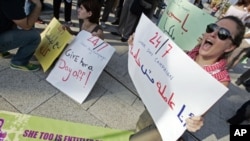
Delegates attending the International Labor Conference have adopted a landmark Convention aimed at improving the working conditions of tens of millions of domestic workers worldwide.
The measure was passed by a vote of 396 in favor, 16 abstentions, and one negative vote cast by Swaziland. The Convention is an international treaty that is binding on member states that ratify it.
The director-general of the International Labor Organization [ILO], Juan Somavia, calls the adoption of the Convention a historical moment for domestic workers worldwide.
“Today, we have taken a significant step by an overwhelming majority towards making domestic work, decent work," said Somavia. "In fact, it is the name of the Convention, making what is too often invisible work, visible.”
Recent ILO estimates show there are at least 53 million domestic workers worldwide. But given the hidden nature of this work, experts believe this number is probably closer to 100 million. Around 83 percent of these workers are women or girls, and many are migrant workers, most come from developing countries.
The ILO says domestic workers very often are exploited and treated badly in the households in which they work. Many work long hours for little pay and often suffer physical and mental abuse from their employers.
The Convention states domestic workers are workers like all others. They are neither servants, nor members of the family.
The new ILO standards say domestic workers must have the same basic labor rights as those available to other workers. These include reasonable hours of work, weekly rest of at least 24 consecutive hours, and a limit on in-kind payment.
Manuela Tomei is director of the ILO’s Conditions of Work and Employment Program. She acknowledges that providing the protections enshrined in the Convention will not be easy. But she said the agreement is not toothless. She said there are a number of concrete measures in the Convention that can make a difference.
“Measures that are related to the fact of ensuring, first of all, labor inspectors might be allowed to enter into private households under, of course, very strict conditions in order to verify whether or not the national law as far as domestic workers are concerned is being applied or not,” said Tomei.
Another provision in the Convention emphasizes the need to provide adequate information to domestic workers about their rights. That is the tasks they are prepared to perform, the hours of work and pay.
The Convention will come into force after two countries have ratified it. The ILO expects this to happen by next year.
Landmark Convention Adopted to Protect Domestic Workers
- By Lisa Schlein