



News / Middle East

Libyans in US Hope for Gadhafi's Capture

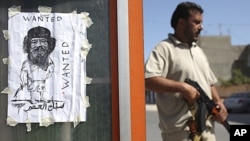
A rebel fighter stands next to an image representing Moammar Gadhafi at a checkpoint in Tripoli, Libya, August 30, 2011
TEXT SIZE - +

Ashraf Tulty says he hasn’t been sleeping much lately. How can he, when events in his home country of Libya seem to change minute by minute?
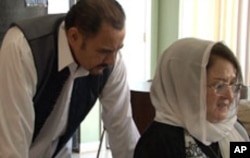
Ashraf Tulty watches developments in his home country of Libya.

Tulty, a 48-year-old Bengazhi native whose family moved to Tripoli when he was a baby, came to the United States 10 years ago and was granted asylum.

He and his family have been glued to their television while also trying to stay in touch with family members in Libya.  Whether it’s by facebook and other social media - or by phone, Tulty and the others in his community have been anxiously watching the developments in Libya.

The Libyan Rebellion

  • February 15, 2011: Inspired by Arab Spring revolts in Tunisia and Egypt, riots break out in Benghazi
  • February 26, 2011: The U.N. Security Council imposes sanctions on Libyan leader Moammar Gadhafi and his family. The International Criminal Court is asked to investigate the crackdown on rebels.
  • March 19, 2011: U.S., Britain and France launch U.N.-mandated air attacks over Libya to halt advances on civilians by Mr. Gadhafi's forces.
  • March 30, 2011: Libyan Foreign Minister, Moussa Koussa, defects and flies to Britain. Other senior officials follow suit.
  • April 30, 2011: A NATO missile attack on a house in Tripoli kills Mr. Gadhafi's youngest son and three grandchildren.
  • June 27, 2011: The International Criminal Court issues arrest warrants for Mr. Gadhafi, his son Seif al-Islam and intelligence chief Abdullah al-Senussi.
  • July 15, 2011: The United States recognizes the Transitional National Council as the legitimate government of Libya.
  • July 28, 2011: Former interior minister Abdel Fattah Younes, who defected to the rebels in February and became their military chief, is killed.
  • August 20, 2011: Rebels launch their first attack on the nation's capital, Tripoli, in coordination with NATO forces.

Tulty said that he knows Moammar Gadhafi’s reign is over, but he is not sure what a new Libya will look like. He is not sure that the current head of the Transitional National Council - Mustafa Abdul Jalil - will lead be the man to lead a new Libya.  But Tulty says his country will be very different from the last 42 years under Gadhafi.

“So maybe the president will be just a symbol like in various countries,” said Tulty. “And maybe we need a maverick, shrewd Prime Minister and government cabinets to rule Libya because the new stage of Libya is very challenging.”

Tulty said that he is not sure that the current head of the Transitional National Council - Mustafa Abdul Jalil - will lead be the man to lead a new Libya.

“We need the right people on board,” he said. “We need the people who have the qualification, who have the knowledge, who have the charisma to run Libya to the [next] stage.”
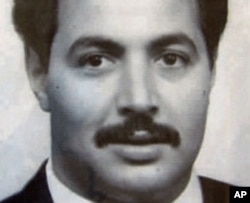
Ashraf Tulty's brother Ahmed (file photo)

Tulty has paid a personal price for opposing Gadhafi - his brother was killed in Triploi’s notorious Abu Salim prison.  Tulty and his family fled the country in 2011. This year, his cousin was killed in fighting in Benghazi. 

Ashraf Tulty is active in the Libyan Council for North America, and is the chairman of its media committee. He works as a community relations manager for Guidance Residential, a financial services company which caters to the Islamic community.

Mohaned el Zuni and his fiancée Aisha Swessi say they hope to help a new Libya emerge after the regime of Moammar Gadhafi is gone.

As news came that opposition forces had capture Tripoli, family friends Aisha Swessi and her fiancée Mohaned al Zuni have came to watch the situation unfold on television. Al Zuni, a 27-year-old, came to the United States last year. He said it was hard to watch events in Libya unfold from far away.

“So that’s why I was happy and sad at the same time. I was so sad that I was not participating in the real protesting in Benghazi,” he said. “But thank God that everything is done now, and I hope that Libya will be better soon.”

Al Zuni says he wants to be a part of the new Libya, along with Aisha. She says Moammar Gadhafi took away what it meant to be Libyan - people’s identities - and she hopes that a new government will restore the country’s ideals.  She said her grandparents used to travel freely in Libya and around the world, but after Gadhafi took power in 1969, her grandfather died in poverty. 

She is finishing her degree in business management at George Mason University. Both hope to help rebuild Libya once the complicated game of who will lead the new Libya is decided. Al Zuni says he wants their children to grow up in a free Libya, with the same rights he has enjoyed since he moved to the United States in March of 2010.

You May Like

Pakistan Reiterates Opposition to US Drone Strikes

Day earlier US President Barack Obama justified 'constrained' drone usage to save lives More

Study Identifies Risks of Human Spread of H7N9 Bird Flu

Study suggest that international measures to contain the H7N9 influenza, in the event of severe outbreak, will need to be targeted in Asia More

Violence Continues in Conakry Over Upcoming Elections

Opposition has called for boycott of elections More

Video Syria's Civil War Fuels Violence in Iraq

Analysts say al-Qaida-linked militants are flowing back and forth from both countries More

Video Star Trek Influence Lives Long and Prospers

As new movie thrills, many are once again discussing the iconic franchise's influence on society, science and technology More

OECD: Developing Green Cities Key to Sustainable Future

OECD suggests strategies to mitigate rapid growth, industrialization in urban centers, which produce about two-thirds of greenhouse gas emissions More

This forum has been closed.
Comments
     
There are no comments in this forum. Be first and add one

Featured Videos

Your JavaScript is turned off or you have an old version of Adobe's Flash Player. Get the latest Flash player.
Video

Video Volunteers Help Revive LA's Concrete River

The Los Angeles River is a concrete drainage channel through much of its 80-kilometer length. It channels waste-water from storm drains and has become a receptacle for much of the city's trash. But as Mike O'Sullivan reports, the river is slowly being restored with the help of volunteers, who take part in an annual clean-up.