A senior Libyan diplomat has asked the U.N. Security Council to delay adoption of a resolution ending the NATO-enforced no-fly zone over Libya. That mission is due to end on Monday.
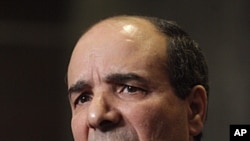
Libyan U.N. Deputy Ambassador Ibrahim Dabbashi said Wednesday that the Libyan people are opposed to any foreign presence in their country, especially after declaring the country liberated on Sunday.
He said Libya looks forward to terminating the need for the no-fly zone which was protecting citizens from forces loyal to former leader Moammar Gadhafi, but conceded that the security situation may not be stable enough to do so just days from now. He also noted that the national armed forces have not been reactivated, and there is some question of Libya’s current capacity to monitor its borders. Ambassador Dabbashi is heard here through a translator.
“Therefore, we wish to inform you not to be hasty in adopting a resolution and we will inform you of official decision of NTC which we hope will be prior to the end of this month,” Dabbashi said.
Ambassador Dabbashi, who defected from the Gadhafi regime in the early days of the revolution, said Libya has entered a new phase in which it looks forward to a democratic Libya that respects human rights, preserves fundamental freedoms of its citizens and seeks good relations with the rest of the world.
He addressed questions about the death of Moammar Gadhafi last week, in which video raised the possibility that the injured dictator was executed by his captors. The envoy said the NTC would not condone any such human rights violations.
“If we come across an encroachment on the rights of Gadhafi or any other person, those perpetrators will be punished; must be punished. In conformity with initial inquiries and information we have, al-Gadhafi was injured in the course of the clashes between his loyalists and the revolutionaries. When he was arrested he was bleeding from his abdomen and head," Dabbashi explained. "He passed away with his arrival to the hospital in Misrata. According to initial reports, none of the revolutionaries fired at him after arresting him.”
He said an independent commission of inquiry has been set up and its findings will be made public after the completion of the investigation.
The U.N.’s top diplomat in Libya, Ian Martin also briefed the Security Council. He repeated international concerns about the proliferation of weapons in Libya and those filtering out beyond its borders. Those include chemical weapons, nuclear materials and shoulder-fired anti-aircraft missiles known as MANPADS.
“Thousands [of MANPADS] were destroyed during NATO operations. But I have to report to you our increasing concerns over the looting and likely proliferation of MANPADS, as well as munitions and all sorts of mines in large numbers, with the most serious potential local and regional implications,” Martin noted.
The U.N. Security Council is currently considering a Russian-drafted resolution on stemming the proliferation of such weapons inside Libya and into the wider region.
Libyans rose up against Gadhafi’s 42-year rule over them in February. The country’s former rebels declared liberation on Sunday after they extended their control over Gadhafi’s last loyalist strongholds.
Libya Seeks Delay in Ending UN No-Fly Zone