


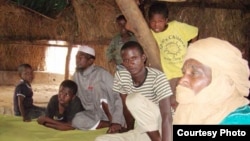
Despite the military success against Islamist groups in northern Mali, displaced civilians are being warned not to return home too soon. The Internal Displacement Monitoring Center says a false sense of security could lead to further displacement.
A recent survey by the International Organization for Migration said 93 percent of Malians, who were displaced by the conflict over a year ago, are eager to go home. They’re encouraged by advances being made by French, Malian and West African troops.
“Throughout 2012, we’d been monitoring the crisis since it broke out last January. And upwards of 230,000 people were forced to flee their homes within Mali. People displaced throughout Mali are simply homesick,” said Elizabeth Rushing, country analyst for West Africa for the Internal Displacement Monitoring Center. She said that the displaced simply want a sense of normalcy again.
“Just to give you an example of this strong desire. When I was in the country last October, the families with whom I spoke were living in a real state of limbo and many of them were reticent to set down roots because of an unshakeable hope to go home soon.”
The strong desire to return home, said Rushing, could blind them to a harsh reality. For example, the north remains very insecure.
“[In] the recent military intervention – they managed to they managed to wrest control again of many parts of the north from these armed groups, but they’ve by no means disappeared. Many have dispersed in the hills. And many have also been reported to have shaved their iconic beards and started to seek anonymity among the general population. So there’s a real threat that they’re actually regrouping and planning further attacks, such as those we’ve seen in Gao just two weeks ago, with suicide attacks within the center of town,” she said.
And then there’s the problem of finding something to eat.
“In some regions,” she said, “that these people are going home to there’s simply no food. They’re returning to an area within the wider Sahel that’s been experiencing [a] severe and chronic food crisis for the past few years. And this has only been exacerbated by the recent conflict.”
Algeria has closed its border with Mali, which has affected trade and food shipments from that country.
Rushing said, “Many predict that this could be a crisis condition in many parts of the north and center of Mali by April, which could be worsened if displaced farmers are not able to get back to their fields for planting season in May.”
She said that the international community has a window of opportunity to act. Since January, humanitarian agencies have slowly gained access to parts of northern and central Mali. However, she said that aid agencies have received only three percent of the more than $370 million they requested to help rebuild the country.
Rushing added that the Malian government has the will to help its citizens, but not the resources.
“In December, the country ratified the Kampala Convention, which is the first legally binding framework protecting the rights of internally displaced people. But at the moment, while they’re trying to re-consolidate power and security throughout the country, they just have very little capacity to implement this. So I think we could see real challenges ahead.”
She said that any “premature and uncoordinated return” of civilians “would leave thousands at risk of being displaced again.”

A recent survey by the International Organization for Migration said 93 percent of Malians, who were displaced by the conflict over a year ago, are eager to go home. They’re encouraged by advances being made by French, Malian and West African troops.
“Throughout 2012, we’d been monitoring the crisis since it broke out last January. And upwards of 230,000 people were forced to flee their homes within Mali. People displaced throughout Mali are simply homesick,” said Elizabeth Rushing, country analyst for West Africa for the Internal Displacement Monitoring Center. She said that the displaced simply want a sense of normalcy again.
“Just to give you an example of this strong desire. When I was in the country last October, the families with whom I spoke were living in a real state of limbo and many of them were reticent to set down roots because of an unshakeable hope to go home soon.”
The strong desire to return home, said Rushing, could blind them to a harsh reality. For example, the north remains very insecure.
“[In] the recent military intervention – they managed to they managed to wrest control again of many parts of the north from these armed groups, but they’ve by no means disappeared. Many have dispersed in the hills. And many have also been reported to have shaved their iconic beards and started to seek anonymity among the general population. So there’s a real threat that they’re actually regrouping and planning further attacks, such as those we’ve seen in Gao just two weeks ago, with suicide attacks within the center of town,” she said.
And then there’s the problem of finding something to eat.
“In some regions,” she said, “that these people are going home to there’s simply no food. They’re returning to an area within the wider Sahel that’s been experiencing [a] severe and chronic food crisis for the past few years. And this has only been exacerbated by the recent conflict.”
Algeria has closed its border with Mali, which has affected trade and food shipments from that country.
Rushing said, “Many predict that this could be a crisis condition in many parts of the north and center of Mali by April, which could be worsened if displaced farmers are not able to get back to their fields for planting season in May.”
She said that the international community has a window of opportunity to act. Since January, humanitarian agencies have slowly gained access to parts of northern and central Mali. However, she said that aid agencies have received only three percent of the more than $370 million they requested to help rebuild the country.
Rushing added that the Malian government has the will to help its citizens, but not the resources.
“In December, the country ratified the Kampala Convention, which is the first legally binding framework protecting the rights of internally displaced people. But at the moment, while they’re trying to re-consolidate power and security throughout the country, they just have very little capacity to implement this. So I think we could see real challenges ahead.”
She said that any “premature and uncoordinated return” of civilians “would leave thousands at risk of being displaced again.”