


The long-awaited trial of former Egyptian president Hosni Mubarak opened in Cairo this week. He was ousted by a popular uprising early this year. In Africa, many see Mubarak’s trial as a watershed moment in the history of holding dictators to account for crimes committed against their people.
It was the trial many in Africa thought they would never see. The appearance of Egypt's former president in court charged with ordering the killing of protesters during Egypt's uprising in January along with a host of corruption charges, has provoked condemnation from some African politicians and praise from some political analysts.
“It’s unprecedented in Egyptian terms; it is unusual in African terms, to topple a president midterm and bring him to judicial trial,” said Dr Tim Hughes of the South Africa Institute for International Affairs.
He said this trial sets a significant precedent for Africa, adding “its unchartered territory for Africa. We have had coup d’états, and uprisings but not a situation where judiciary actually gets to bring a former president to trial.”
Hughes, a Governance of Africa's Resources Programme Research Fellow, noted that Africa has already begun to feel the shockwaves of the democratic spring in North Africa in central, eastern and southern Africa.
He cited a wave of popular protests in countries such as Uganda, where President Yoweri Museveni, has been in power for 25 years, the potential for significant protest in Swaziland and perhaps in Zimbabwe.
But even in other democratically elected countries such as Malawi, he said, “we now see this phenomenon of popular dissatisfaction leading to popular protest on the streets.”
“Lessons have to be learned and have to be shared,” he said in reference to political changes in North Africa. “...people in central and southern Africa need to establish how transformations can come about hopefully peacefully. This is a social phenomenon.”
Hughes emphasized the desirability of constitutional term limits that have worked well in countries such as Ghana, Nigeria and South Africa.
He however said there are rulers who can extend their stay in power because they have access to natural resources such as oil. Rulers of countries such as Angola and Equatorial Guinea, he said, can tap into these resources and in a sense, subvert the democratic process and extend their term in office.
Hughes said that Uganda falls in this category when it starts exploiting its oil since Museveni also has the potential to extend his term even more.
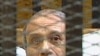
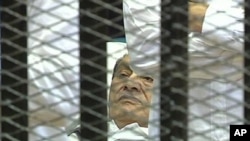
Lying on a stretcher in standard-issue white prison overalls, behind the bars of the defendants' cage, the 83-year- Former Egyptian president Hosni Mubarak denied all charges against him.
He stands accused of economic corruption, striking an illegal business deal involving gas exports to Israel, and the unlawful killing of protesters during the 18-day uprising against his reign.
Mubarak's two sons and co-defendants, Alaa and Gamal – the latter having once been Mubarak's presumed heir to the presidency – also protested their innocence. Former interior minister Habib el-Adly and six of his senior police deputies are also facing similar charges.