Michelle Obama Returns to Fight Against Childhood Obesity
A second term for President Barack Obama allows Michelle Obama to continue her high-profile campaign against childhood obesity.
It's a fight Mrs. Obama took up at the start of her husband's first term and she's expected to use her platform as first lady to continue it into his second.
Planting seeds for better health
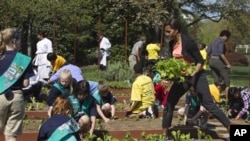
It started with the garden. Shortly after moving in four years ago, Michelle Obama dug up a patch of the White House lawn to plant organic vegetables and herbs, with the help of local school kids.
It was a potent symbol for the urgent issue Obama would pursue.
“Too many kids are consuming high-calorie foods with low nutritional value, and they’re not getting enough exercise," she said. "Plain and simple. They’re not eating right, and they’re not moving their bodies at all.”
One out of every three children in the U.S. is overweight or obese, raising healthcare costs and even threatening the nation's military readiness.
First lady Michelle Obama carries mustard plants for planting as she is joined by school children from across the country for the fourth annual White House Kitchen Garden spring planting, Monday, March 26,2012, at the White House.
Let's Move
So, in February of 2010, the first lady launched a government-wide initiative called “Let’s Move.” The goal: to end childhood obesity in a generation.
“This is our obligation," Obama said. "Not just as parents who love our kids, but citizens who love this country.”
Overhauling the meals served in U.S. public schools has been a major focus for the first lady, but that's also drawn strong opposition from conservative lawmakers and segments of the food industry.
She got a rock-star welcome at Parklawn Elementary just outside Washington last January, when she visited to announce new standards for school cafeteria food.
“When we send our kids to school, we have a right to expect that they won’t be eating the kind of fatty, salty, sugary foods that we’re trying to keep from them when they’re at home,” she said at the time.
Major shift
To get government funding, schools must serve meals that are healthier than the old standards required, says health advocate Margo Wootan with the Center for Science in the Public Interest.
“Double the amount of fruits and vegetables… limit the amount of salt, make the grains whole grain, the milk low fat," Wootan says. "This is a major shift.”
But making that shift has not been easy. Many conservatives viewed the changes through the same lens as they saw the new U.S. health care law: as big government making decisions that should be left to individuals.
And limits on French fries and pizza on school menus drew fire from potato growers and pizza makers.
Challenges
With the other rules now in effect in cafeteria kitchens nationwide, food service directors are facing another hurdle: healthier food is more expensive.
“The costs have gone up. But reimbursement has not gone up accordingly,” Penny McConnell, food service chief at Parklawn and the other Fairfax County schools.
She says the extra six cents per meal she receives from the federal government does not cover the cost of the extra fruits and vegetables she has to buy.
Notoriously fussy kids who don’t always like healthier food present another challenge.
“Having it there and available is half the battle," says Cornell University nutrition expert David Just. "But we’ve got to get them to actually want to eat it, so we’re not just putting food on the tray and throwing that good food away.”
Continuing the fight
More challenges lie ahead for Michelle Obama’s anti-obesity efforts as the administration sets rules for food in school vending machines and other snacks.
At Parklawn Elementary School, food service chief Penny McConnell says the meals on cafeteria trays will be healthier, and the benefits could last a lifetime.
“If we get the children at the elementary age, then I think we’ve won them through adolescence [and then young adults] and they’ll take these practices into their adulthood.”
It is a goal Obama will be pursuing during her husband's second term: nurturing the seeds she planted in the first.