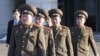



North Korea’s military says it will not bother to hold further talks with South Korean officers. The statement comes a day after preliminary discussions between the two sides collapsed.
Pyongyang blames the South for the collapse of their preliminary military talks. The North’s military said Thursday that the South’s colonels left their meeting at Panmunjom because they reject dialogue and do not wish to see relations improve.
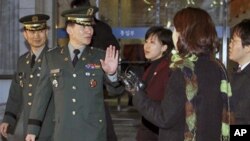
South Korea’s defense ministry says it was actually the North’s delegation that left without comment following an acrimonious exchange Wednesday.
The North Korean statement, which adds that Pyongyang’s military and people will never "beg" for peace, is relatively subdued compared with comments after similar negotiating ruptures.
Park Kie-duck is a senior researcher at the Sejong Institute, a policy research organization in Seoul. He believes Pyongyang wants to leave open the door for future talks as it does not want relations to remain ruptured.
The South’s lead delegate to the talks, Colonel Moon Sang-gyun, says the door is still open for high-level military discussions but Pyongyang must accept Seoul’s condition that it takes responsibility for two lethal incidents last year.
South Korea contends a North Korean torpedo sank one of its navy ships in the Yellow Sea last March. The North Koreans deny any involvement in the incident. North Korea, seven months later, shelled a South Korean island in the same waters, but has not apologized, as Seoul demands.
Sejong Institute analyst Park says it is likely that Pyongyang will reach out first to suggest another meeting of colonel-level officers.
Park says that is because China, North Korea’s mentor and supporter, wants inter-Korean talks to be held. Also, Park says, Seoul has made clear it will not continue with talks unless Pyongyang changes its attitude and shows sincerity.
South Korean officials say they also want progress on the military dialogue before allowing Red Cross talks with the North on resuming family reunions across the heavily fortified border.
The United States, South Korea and Japan have also indicated multi-national talks on North Korea’s nuclear weapons programs are not possible until there is some progress in discussions between Pyongyang and Seoul
The nuclear talks also include China and Russia, who have called for a new round. North Korea withdrew from the process in 2009 and kicked out nuclear inspectors from the United Nations.
Concern has increased about Pyongyang’s nuclear weapons development after North Korea last year revealed an expanded uranium enrichment program.