


The Obama administration says planned cuts in U.S. defense spending will not degrade American military capabilities or the nation’s ability to confront threats on the world stage. Nearly half a trillion dollars is expected to be cut from the Pentagon’s budget during the next decade.
At a time of massive federal deficits and ballooning national debt, the Obama administration is looking for budget savings in many quarters, including the Defense Department. Last week, the president outlined a new U.S. defense strategy with increased focus on the Asia-Pacific region and fewer conventional ground forces available for long deployments.
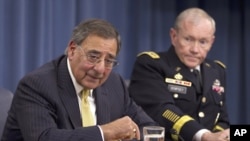
Appearing on CBS’ Face the Nation television program, Defense Secretary Leon Panetta dismissed any suggestion the U.S. military is in decline or retreat.
“The United States is going to remain the strongest military power in the world," he said. "Yes, we have to prioritize. But the bottom line is, when we face an aggressor anyplace in this world, we are going to be able to respond and defeat them.”
Asked about Iran’s nuclear program, Panetta said Tehran is developing a capability to eventually produce an atomic weapon. The defense secretary said international sanctions against Iran are appropriate and necessary to dissuade Iran from pursuing a nuclear arsenal, but added the following:
“They [Iranian leaders] need to know that if they take that step, they are going to get stopped,” added Panetta.
Also appearing on CBS was the Chairman of the Joint Chiefs of Staff, Martin Dempsey, who declined to comment on U.S. military contingency planning for Iran, except to confirm that such plans exist.
“They have invested in capabilities that could, for a period of time, block the Strait of Hormuz," he said. "We have invested in capabilities to ensure that, if that happens, we can defeat that.”
Even deeper U.S. defense cuts could loom if Congress fails to meet deficit reduction targets, triggering automatic reductions in domestic and military spending.