


The Pakistani government has reacted sharply to the U.S. raid that killed Osama bin Laden, warning that countries should not think that they have free reign to come and go through Pakistan.
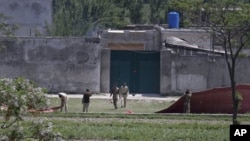
Pakistani authorities on Tuesday allowed journalists to approach the outer walls of the compound where U.S. Special Forces killed Osama bin Laden, but no further.
Pakistan is coming under increasing pressure to explain how the world's most dangerous man could hide in a conspicuously built mansion in a town that is close to the country’s capital and has a large military presence - including an elite military academy. Just last week, the head of the Pakistani military attended the academy's graduation ceremony and addressed the cadets and the nation.
"We in Pakistan's army are fully aware of the internal and external threats to our country. The back of the terrorists has been broken," said Army General Ashfaq Kayani.
Osama bin Laden’s hiding place was just three kilometers away from where General Kayani spoke.
The government of President Asif Ali Zardari is eager to explain what it knew about bin Laden’s presence and defend its counterterrorism efforts.
Writing Tuesday in the Washington Post newspaper, Mr. Zardari, denied suggestions that Pakistani authorities had protected bin Laden.
Contradicting earlier statements, the Pakistani government said Tuesday that its intelligence agency had been aware of the suspicious compound for years, and provided key intelligence about it to the CIA.
On Monday, U.S. Secretary of State Hillary Clinton said Pakistani cooperation had helped lead U.S. forces to bin Laden.
But the Pakistani Foreign Ministry expressed deep concerns and reservations about the manner in which the mission was carried out.
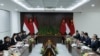
Pakistan’s Foreign Minister Salman Bashir met Tuesday with the U.S. special envoy to the region, Marc Grossman, and Afghanistan’s foreign minister. Grossman said regardless of who knew about the mission ahead of time, the focus should be on its success.
"He’s dead, it’s good. We still have to fight extremism. And as Foreign Secretary Bashir has said, 'Do not, please, lose sight of the fact that we have had here a trilateral meeting about peace in Afghanistan,'" Grossman said.
Still, there are growing questions about how Osama bin Laden could have found refuge here, and growing calls in the U.S. for an investigation.
Pakistan Under Pressure Over bin Laden's Hiding Place