


Japanese media reports say engineers at a stricken nuclear plant were preparing late Sunday to send electrical power into two nuclear reactors heavily damaged by a massive earthquake and a tsunami, as the toll of missing and dead from the twin disasters passed 20,000.
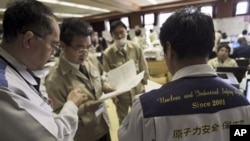
Japanese television said Tokyo Electric Power Company workers were inspecting equipment in reactors number 1 and 2 at the Fukushima-Daiichi power plant, to make sure components were in working order. The report said engineers wanted to route electricity to the crippled plant's central control room by late Sunday, in a race to cool dangerously overheated spent fuel rods. TEPCO said it can begin collecting data on conditions in the reactors once power is restored.
The company also said pressure in reactors 3 and 4 showed some signs of stabilizing late Sunday. Additionally, authorities said the number 5 and 6 units -- the least problematic of the six reactors -- were safely under control after newly-restored backup power sources activated water pumps that cooled storage pool temperatures below 100 degrees Celsius.
Meanwhile, the government says Japanese Prime Minister Naoto Kan will tour an area 20 kilometers from the plant on Monday. That announcement came hours after Chief Cabinet Secretary Yukio Edano said the entire facility north of Tokyo will eventually be shut down because it had sustained too much damage to repair.
Japanese police said the tally of confirmed dead and missing from the March 11 catastrophes climbed to just under 21,000 by Sunday evening. Police said that estimate includes forecasts for nearly 15,000 fatalities in Miyagi prefecture, one of four northeastern jurisdictions that bore the brunt of the huge tsunami.
In a bit of good news Sunday, rescue workers pulled an 80-year-old woman and her 16-year-old grandson from a flooded house in the hard-hit city of Ishinomaki. The pair were evacuated by helicopter and are being treated in a hospital.
In another development, the Japanese government says elevated radiation levels have been detected in milk and spinach in Fukushima prefecture and in a shipment of fava beans shipped to Taiwan.
However, Chief Cabinet Secretary Yukio Edano said the tested food does not pose an immediate health risk. He said the government will decide Monday whether to ban sales and export of food products from the area.
Government health officials said Saturday that radioactive iodine was found in drinking water from Fukushima prefecture last week, at levels above government safety limits. Kyodo news, citing Japan's Health Ministry, says the iodine levels then fell. There was no explanation in the report as to why the information was not released sooner. The International Atomic Energy Agency says radioactive iodine can pose a short-term health risk if ingested, particularly for children.
The government also said trace amounts of radioactive substances have been detected in tap water in Tokyo and other areas, but at levels that are not dangerous to human health.
The risk of radiation poisoning has already forced the evacuation of more than 200,000 people who lived within 20 kilometers of the reactors. Many are in makeshift shelters, with inadequate food, water and other supplies, in frigid winter weather.
Japan raised the severity rating of the disaster from 4 to 5 on the 7-point international nuclear event scale. Level 5 signals an accident with wider consequences, including some release of radioactive material, with a high probability of significant public exposure.
Japanese Engineers Prepare Damaged Reactors for Electrical Power
- By Steve Herman