



Work continued Sunday to bring the Fukushima nuclear power plant in Japan under control. The plant owner had earlier said radiation contamination in water inside part of one of the buildings had increased sharply, but later said that was a mistake.
It was an embarrassing, but welcome admission from Tokyo Electric Power executive vice president, Sakae Muto.
Mr. Muto says his company had miscalculated when measuring the level of radioactive Iodine-134 in water in the basement of a turbine building adjoining the plant's Number-2 reactor.
The company had said it was 10-million times normal, but later revised that to 100,000 times normal.
Even at that level, the water is very radioactive, and it should not be there. Tokyo Electric Power says it does not know the source, but there is a possibility it is coming from the reactor core.
Its presence will hamper work to install electricity cables and bring pumps back online. Water in a neighboring building gave two workers heavy radiation contamination Thursday after they stood in it without wearing boots.
Latest measurements of seawater near the plant show levels of Iodine 131 are 1,850 times the legal limit, up from 1,250 times the day before. Japan's government said it does not pose any immediate danger to human health.
Work at the plant continued Sunday to improve the water-pumping system that is attempting to keep the reactor and spent fuel rods cool.
Fire trucks were due to be replaced by portable pumps and the water supply from seawater to fresh water. There is a worry that continued use of seawater could corrode pipes and valves and cause future problems.
More than two weeks have passed since a massive earthquake and tsunami destroyed large portions of Japan's eastern coast. Japanese police say about 10,800 people are confirmed dead and 16,200 are missing.
Nuclear Radiation Readings Corrected at Crippled Japanese Plant
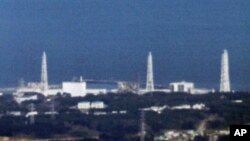
The new readings were taken just hours after incorrect readings of 10 million times higher than the acceptable norm were reported