



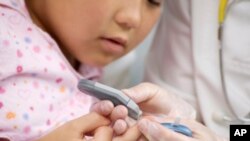
Scientists for the first time have successfully bred mice with a human form of juvenile diabetes. The breakthrough could speed the development of treatments for the disease, which typically afflicts children and teenagers and can significantly shorten their lives.
Juvenile, or type I, diabetes affects approximately 10 percent of all diabetics. Survival requires strict adherence to a daily regimen of painful insulin hormone injections, and the disease can also cause multiple long-term complications, including blindness, heart disease and kidney failure.
Unlike the adult form of the disease, called Type II diabetes, in which the body stops using insulin properly to convert food sugars into energy, type I diabetes is an autoimmune disorder. The body’s immune system attacks and destroys the beta cells within the pancreas that make insulin.
Until now, scientists trying to develop drugs to calm the immune system of those with juvenile diabetes have had to work with laboratory mice with only a rodent version of the disease - not an ideal situation, say experts, because treatments that might work in mice can be ineffective or harmful in humans.

But Matthias von Herrath, director of the Center for Diabetes Research in California, says having a rodent with human diabetes should speed the development of drugs for type I diabetes.
"You don’t want to put it in humans if you can avoid it, if it’s not a good molecule or not a good drug," he said. "And this mouse allows you to test the real drug, not to make an equivalent that only works in the mouse."
French and British researchers developed the laboratory mouse with human diabetes and they were able to arrest the immune system’s assault on the animal’s beta cells using a human version of an antibody called anti-CD3.
Anti-CD3 is currently undergoing clinical trials as a promising therapy for type I diabetes. Von Herrath says the antibody does two things:
"They [it] not only take away the cells that are destroying the islets in type I diabetes, at least temporarily, but also they foster what you would call immune regulations - they train your body’s own immune system to regulate better and prevent diseases like type I diabetes," he said.
Von Herrath says the results of the human trials won’t be known for several more months.
A mice model of juvenile diabetes is useful for more than just drug development. Von Herrath says it can help researchers determine proper dosing of medications for diabetics. He says the diabetic mouse could also help researchers identify biological markers indicating when someone is at risk for developing the disease.
An article describing the development of a mouse model with human type I diabetes, and a commentary by Matthias von Herrath, are published this week in the journal Science Translational Medicine.