



There’s been a big improvement in Somalia’s humanitarian situation. U.N. officials say it’s due to innovative approaches to aid delivery, favorable rains and success against militants.
There are about one million fewer Somalis listed as being “in crisis.” That’s half of what it was six months ago.
“The situation in Somalia [has] radically changed in a sustainable manner. We are at risk now if we don’t support the people to come out from this very, very uncertain situation to go back in a situation like the one in 2011,” said Luca Alinovi, who’s in charge of U.N. Food and Agriculture Organization (FAO) operations in Somalia.
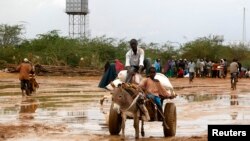
In 2011, famine was declared in several parts of Somalia. Many people died and many others walked for weeks to reach areas with food and water. This includes the huge Dadaab refugee camp complex in Kenya.
“During the famine and the season after, we’ve been substantially intervening with cash-based intervention. We’ve been supporting the people to stay where they were. Although obviously there was a substantial number of displaced moving out, but the number was much less than what could have been. FAO was particularly strong in supporting [the] cash for work program, which helped the people to rebuild the infrastructure that they need – to continue to produce even during [a] difficult season – to continue to breed animals, He said.
Previous interventions, he said, were based more on simply providing commodity aid – food, shelter and basic essentials.
At a time when climate change has made annual rainfall either unpredictable or scarce, 2012 was a good year.
“It was about the average. So it went quite well in terms of rain. We have also two major rivers, which cross Somalia for which there is quite a high capacity of having irrigated area[s]. A lot of investment in the past and today and hopefully tomorrow will be in strengthening these irrigated area[s] to increase the production in those area[s], which are able to cover basically above 50 percent of the needs of the country,” he said.
Another major factor affecting the humanitarian situation has been the success against al Shabab militants. Forces from the AU, known as AMISOM, along with those from the Somali government and Kenya, have driven the group from many areas. However, Alinovi said that insecurity is still a problem.
“It’s still quite unstable and the military operation is still ongoing very much, particularly in the agricultural area, in the rural area, which obviously creates a climate of uncertainty. “However, we also have to say that the increased amount of area which has been liberated by AMISOM, has been allowing increased access to the area. Having said that -- most of the rural area remains under the control of al Shabab,” he said.
The FAO official said that the recent success is just one step toward reestablishing Somalia as a stable nation. He says there are several hundred more steps to go. Alinovi added that more programs are needed to build the resilience of the Somali people against future shocks, whether from drought or conflict.
The FAO, the World Food Program and UNICEF are working together to do just that. The humanitarian agencies warn that the situation remains critical for more than one million Somalis. They are still not able to meet their basic needs on their own.

There are about one million fewer Somalis listed as being “in crisis.” That’s half of what it was six months ago.
“The situation in Somalia [has] radically changed in a sustainable manner. We are at risk now if we don’t support the people to come out from this very, very uncertain situation to go back in a situation like the one in 2011,” said Luca Alinovi, who’s in charge of U.N. Food and Agriculture Organization (FAO) operations in Somalia.
In 2011, famine was declared in several parts of Somalia. Many people died and many others walked for weeks to reach areas with food and water. This includes the huge Dadaab refugee camp complex in Kenya.
“During the famine and the season after, we’ve been substantially intervening with cash-based intervention. We’ve been supporting the people to stay where they were. Although obviously there was a substantial number of displaced moving out, but the number was much less than what could have been. FAO was particularly strong in supporting [the] cash for work program, which helped the people to rebuild the infrastructure that they need – to continue to produce even during [a] difficult season – to continue to breed animals, He said.
Previous interventions, he said, were based more on simply providing commodity aid – food, shelter and basic essentials.
At a time when climate change has made annual rainfall either unpredictable or scarce, 2012 was a good year.
“It was about the average. So it went quite well in terms of rain. We have also two major rivers, which cross Somalia for which there is quite a high capacity of having irrigated area[s]. A lot of investment in the past and today and hopefully tomorrow will be in strengthening these irrigated area[s] to increase the production in those area[s], which are able to cover basically above 50 percent of the needs of the country,” he said.
Another major factor affecting the humanitarian situation has been the success against al Shabab militants. Forces from the AU, known as AMISOM, along with those from the Somali government and Kenya, have driven the group from many areas. However, Alinovi said that insecurity is still a problem.
“It’s still quite unstable and the military operation is still ongoing very much, particularly in the agricultural area, in the rural area, which obviously creates a climate of uncertainty. “However, we also have to say that the increased amount of area which has been liberated by AMISOM, has been allowing increased access to the area. Having said that -- most of the rural area remains under the control of al Shabab,” he said.
The FAO official said that the recent success is just one step toward reestablishing Somalia as a stable nation. He says there are several hundred more steps to go. Alinovi added that more programs are needed to build the resilience of the Somali people against future shocks, whether from drought or conflict.
The FAO, the World Food Program and UNICEF are working together to do just that. The humanitarian agencies warn that the situation remains critical for more than one million Somalis. They are still not able to meet their basic needs on their own.