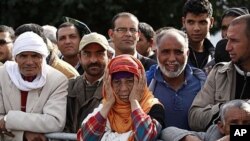



An elderly man is in serious condition after setting himself on fire in southern Tunisia this week - in an apparent attempt to draw attention to the dire economic situation in the North African country. The act speaks to simmering tensions days ahead of the one year anniversary of Tunisia's revolution that launched the so-called "Arab Spring" uprising.
Press reports describe the man as a grandfather in his 80s. He had joined a group of unemployed people demonstrating to be able to meet ministers from the new government visiting the southern region around Gafsa. His act of immolation late Thursday triggered unrest, with police clashing with stone-throwing youths.
It was a similar act - by a frustrated vegetable vendor that triggered widespread protests culminating in Tunisia's January 14th revolution last year that launched the larger "Arab Spring" uprising. Tunis-based political science professor Hamadi Radissi says the same volatile ingredients - poverty and high unemployment - remain today.
"Tunisia today is as it was one year before…with roughly one million job seekers, 20 percent rate of poverty, 170,000 graduates asking for jobs. The situation doesn't change," said Radissi.
Underscoring popular frustration, Radissi says, there have been numerous self-immolations in the year since Tunisia ousted long-time dictator Zine el Abidine Ben Ali. The country has also witnessed a slew of strikes and protests airing political as well as economic grievances.
Still, other observers point to more positive events. In October, Tunisia held its first democratic elections for a new Constituent Assembly that were hailed as an Arab model by the international community. The moderate Islamist Ennahdha party, banned for years under Ben Ali, is now the major political force in the new coalition government.
On Thursday, visiting Foreign Minister Alain Juppe of France - Tunisia's former colonial power - hailed the democratic transition and offered support for the new government.
In remarks to reporters, Mr. Juppe said France will increase its aid to Tunisia. He encouraged French investors and tourists to return to the North African country. The international community has pledged billions of dollar in assistance. But so far, analyst Radissi says, there is little evidence of it on the ground.
"In six months the situation is going to worsen. Europe, the United States and Arab [countries] are not ready or not in a hurry to give money and help the new government because it is Islamist, so they are waiting - and the country can't wait," he said.
Other observers are much more optimistic about Tunisia's future. They see the current problems as growing pains as the country begins a new chapter in its history.
Tunisia Tense Ahead of Revolution Anniversary
- By Lisa Bryant