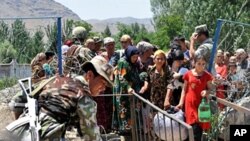
The United Nations refugee agency reports 75,000 people remain displaced in southern Kyrgyzstan, one month after ethnic clashes erupted between the Kyrgyz and Uzbek communities.
Many of the displaced, mostly from the Uzbek community, are unable or afraid to go back to the homes they fled. They lack of shelter and are plagued by problems related to the loss of personal documents.
The Kyrgyz cities of Osh and Jalalabad are calm, said U.N. refugee spokeswoman Melissa Fleming. But she said there are scores of police checkpoints, and the two cities remain under nighttime curfew.
"This has presented particular difficulties for people who do not have papers; and we have evidence that there are frequent situations where the police are harassing these people. So, we are monitoring; and we are interviewing thousands of people and trying to help them find shelter," Fleming said.
The agency estimates 400,000 people were affected by ethnic clashes that broke out in Kyrgyzstan in June. About 100,000, mainly Uzbek women, children and the elderly fled across the border into Uzbekistan. All have since gone back to Kyrgyzstan.
During the panic of flight, the U.N. agency says many people lost important personal papers. The loss of birth certificates, passports, identification cards and documents showing legal ownership of land or houses is proving to be a major problem. Officials say people who have no way to confirm their identities are facing difficulties, even in applying for new papers.
And Fleming said 75,000 displaced people still require help with shelter.
"We are providing them with building materials so they will be able to rebuild their homes eventually. But, in the interim and up to the winter, we are building two-room shelters that will be heated so that they can at least get through the winter. We are also providing them with assistance on the document front, liaising with the government to provide them with advice and urging the government to speed up the process so they can get their documents back."
Widespread violence in June completely destroyed some neighborhoods in and around Osh. More than 1,600 homes were either damaged or destroyed.
Most people are hoping to rebuild their own homes, said the U.N.'s Fleming. The skills to do just that exist in the community, but shes adds the amount of work is substantial, and the Uzbeks will need help from both the government and the international community.
Thousands Remain Displaced In Kyrgyzstan