



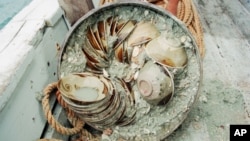
An exhibit that confirmed the existence of a Maritime Silk road between China and western Asia is a source of concern for some historians and archaeologists.
The 1,100 year-old relics, currently on display in Singapore, were discovered more than a decade ago on a sunken Arab ship off the coast of Indonesia.
However, the way they were recovered became the reason for a recent high-level meeting at the Smithsonian Institution in Washington.
Historians and archaeologists are concerned the relics were recovered by a commercial treasure hunter, as opposed to a group using academic methods.
|
Listen to the interview with William Limp, the President of the Society for American Archeology |
William Limp, the President of the Society for American Archeology, said some of the relics might have been sold, and the commercial component of the process would violate ethical standards of scientific fields because it raises the likelyhood that archelogical sites and shipwrecks will be damaged or destroyed.
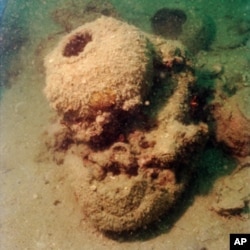
He said following a scientific method for recovering relics is important because once a site is excavated, it is essentially destroyed. "When the desteruction takes place, it [needs to be] taken care of very carefully. Very precise information is recorded, because once it is destroyed, it's destroyed. So what's left is the objects, which have artistic interests, and perhaps in this case, commerical interests. But more important is the information the objects give us about the past," he said.
The exhibition is scheduled to leave Singapore in July and travel the world before ending up at the Smithsonian in Washington next spring.
But it is unclear if the Smithsonian will still host the exhibit, called "Shipwrecked: Tang Treasures and Monsoon Winds". In a statement, the Smithsonian says a final decision on the matter will be announced in May.
Singapore paid $32 million to the company that recovered them off the coast of Indonesia's Belitung Island in 1998. The relics include thousands of objects ranging from glazed pottery to the largest gold cup ever found from the China's Tang Dynasty.