


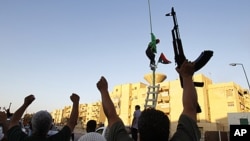
Driving into Tripoli is to drive into a ghost city. It looks like a set for a Hollywood apocalypse film.
Instead of a bustling seaside capital of 1.5 million people, we drove Thursday past kilometer and kilometer of shuttered metal storefronts.
We arrived to find a city stripped of people.
As shots rang in the distance, only an occasional car or pickup truck raced down glass-strewn streets.
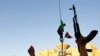
Entering from the west, we met checkpoints every block. Tense rebels dressed in tee-shirts, shorts and sandals manned roadblocks improvised from mattresses, even school desks.
Heavily armed, they were men from the mountains, unable to direct us to our hotel. Fifteen minutes after we left one beachfront hotel, a firefight erupted outside.
After four days of fighting in the capital, the rebels control about three-quarters of the city. But opposition ranges from single snipers to formations of entrenched Gadhafi loyalists.
Our driver took a wrong turn and we soon were traveling alongside the avocado green and mustard yellow of Colonel Gadhafi's six square-kilometer base, breached by the rebels on Tuesday. The base's outer walls bore the signs of a heavy assault - blast marks, burn marks, and holes blown through reinforced concrete by rocket-propelled grenades. All vehicles outside the walls were charred wrecks.
While rebels gave journalists tours of the base's underground tunnels, snipers in another part of the sprawling compound blocked rebel attacks. All day long, rumors abounded in the city that the Gadhafi family had been cornered. Each rumor proved false.
Outside the base, we came to a traffic roundabout. With olive green field tents pitched on the grass, it was apparently a temporary rebel base. But the rebels were out fighting.
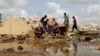
My car circled around slowly, rubber tires crunching on broken glass and spent brass cartridge cases. We passed dozens of smashed up and burnt out cars. Then, three large orange earthmovers blocked our exit. They had been parked sideways, their giant tires shot out, presumably by Gadhafi soldiers hoping to blunt the rebel onslaught.
In the pocket of green in the traffic circle, I spotted eight corpses swelling in the bright Mediterranean sun. They were dressed in civilian clothes, probably rebels caught in a counterattack.
Our driver took another wrong turn. A huge heroic poster of Colonel Gadhafi suddenly loomed from a building, untouched. Within minutes, our car was surrounded by unidentified men carrying automatic weapons.
Then, a rebel pickup truck convoy rounded a corner and sped toward us. I have never seen so many armed men packed in the back of a pickup truck.
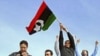
On seeing the VOA TV camera, they raised their right arms to flash V for Victory signs. They shouted "Allahu Akhbar" or God is Great.
Soon we were on our way, going the wrong way down one-way streets, running red lights, to our hotel. Fifteen minutes and fifteen checkpoints later, we entered our destination.
Rebels had laid out a new welcome mat, the Colonel Gadhafi portrait that once graced the lobby wall.
Raw video of the Libya border by Japhet Weeks