



News / Europe

Ukraine's President Vows Non-Interference in Tymoshenko Trial
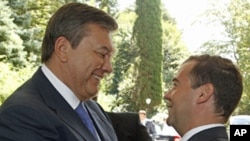
Presidents Viktor Yanukovych (l) and Dmitry Medvedev meeting in Sochi, Aug 11, 2011
TEXT SIZE - +

Ukrainian President Viktor Yanukovych has rejected calls to intervene in the trial of former prime minister and political rival Yulia Tymoshenko.

Yanukovych has been criticized by the West for his government's handling of the Tymoshenko trial, which many Western governments say appears to be politically motivated.

Replying specifically to a letter from Czech President Vaclav Klaus, Yanukovych said he could not, and would not, interfere in the work of the courts, calling such action "unacceptable."  He added that the Ukrainian court system is independent and unbiased.  

Klaus sought assurance from Yanukovych that Tymoshenko's trial is not politically motivated.

The charges against Tymoshenko stem from a 2009 deal that ended Russia's cutoff of natural gas to Ukraine.  Ukrainian prosecutors say she broke the law by not consulting with her government before signing the deal, which they say was not advantageous for Ukraine and cost the country $190 million.  She has denied the charges.

The former prime minister was jailed last week after being held in contempt by the trial judge.  The judge has ignored U.S., European and Russian criticism, and has kept her in jail as her trial proceeds.

The gas deal signed by Tymoshenko was among the topics covered in a meeting Thursday in Sochi  between Yanukovych and Russian President Dmitry Medvedev.  The Ukrainian leader said the two sides need to seek a compromise in their dispute over gas prices.

Earlier this week, the Czech Republic, Hungary, Poland and Slovakia expressed concern about Tymoshenko's case and the rule of law in Ukraine, saying all Ukrainians are entitled to fair, transparent and independent judicial proceedings. The United States also expressed concern.

Some information for this report was provided by AFP and Reuters.

You May Like

Experts Weigh In on Challenges of Closing Guantanamo Prison

Former chief military prosecutor at Guantanamo delivers petition to White House with more than 370,000 signatures, demanding facility be closed down immediately More

Karzai to Discuss Enhancing Defense Ties with India

Afghanistan looking for more military aid as it prepares for withdrawal of NATO forces by next year More

India, China Pledge to Overcome Border Tensions

Indian prime minister and Chinese premier attempt to move past tense standoff in the Himalayas during Delhi talks More

Burmese President Opens US Visit with VOA Town Hall Meeting

Ahead of his meeting with President Obama Monday, Thein Sein answered questions on human rights and economic development in his country More

This forum has been closed.
Comments
     
There are no comments in this forum. Be first and add one

Featured Videos

Your JavaScript is turned off or you have an old version of Adobe's Flash Player. Get the latest Flash player.
Video

Video US Oil Surge Could Impact Mideast Geopolitics

The United States will account for a third of new oil supplies over the next five years, and will become energy self-sufficient in 20 years, according to a new report by the Paris-based International Energy Agency (IEA). Although U.S. oil imports from Arab Gulf countries increased last year, analysts predict the U.S. will lose its dependence on Middle East imports, which is expected to have a huge impact on international relations and the balance of power. VOA's Henry Ridgewell reports.