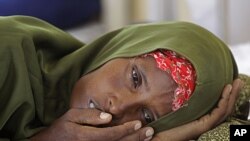
The United Nations is appealing for $7.7 billion to provide emergency aid during 2012 to 51 million people across 16 countries. Eleven of the 16 nations are in Africa. The beneficiary countries include Central African Republic, Chad, Democratic Republic of Congo, Djibouti, Haiti, Ivory Coast, Kenya, Niger, the occupied Palestinian territory, Philippines, Somalia, South Sudan, Sudan, Yemen and Zimbabwe.
The United Nations warns many of the tens of millions of people in 16 beneficiary countries will not survive without emergency aid. It calls them the most vulnerable people in the world -- people who suffer from a range of crises, including war, drought, famine and disease.
The U.N. reports nine of the 16 countries will need significantly more money this year than last to meet their humanitarian needs in 2012. Somalia, by far, is the largest recipient. It will require one-half billion dollars more in 2012 than in 2011.
Valerie Amos, Under Secretary General for Humanitarian Affairs and Emergency Relief Coordinator, says the Horn of Africa is the largest humanitarian crisis in the world. She says 4 million people in Somalia alone need urgent humanitarian aid, as well as nearly 600,000 Somali refugees who have sought protection in Kenya.
“Humanitarian action has already had a significant impact in many regions of Somalia. But mass vaccination campaigns have reduced cases of measles by almost 50 percent, more than 2.5 million people are receiving regular food aid, 1.2 million people are accessing clean water, and emergency nutritional treatment has reached 242,000 acutely malnourished children. Three areas of Somalia have moved from being “famine” areas to “emergency,” Amos explained.
However, Amos notes the situation remains fragile and these improvements will not be sustained unless the current level of assistance continues.
The appeal exposes vulnerabilities in other countries as well. Chad, for instance, is struggling with a widespread food crisis compounded by a devastating cholera epidemic. The U.N. notes people in the Democratic Republic of Congo are subject to attacks by armed groups. Their livelihoods and access to basic needs are affected by human rights violations. It says large- scale food assistance will be needed in the Sahel region, especially in Niger, in 2012.
Amos says violence in newly independent South Sudan is increasing and causing thousands of people to flee their homes. “Rising food insecurity, disease outbreaks and seasonal flooding continue to impact humanitarian conditions on the ground. The appeal seeks $763 million to help 3.1 million people. In Sudan, humanitarian need is driven by conflict, displacement and vulnerability. Humanitarian action will support up to 4.2 million people to ensure food security, access to basic services, shelter and livelihoods opportunities,” she added.
Turning from Africa, the appeal notes with concern that Afghanistan continues to suffer severe humanitarian needs, much of it caused by a harsh drought in the center and north of the country.
U.N. officials note significant progress is being made in improving conditions for hundreds of thousands of victims of Haiti’s devastating 2010 earthquake. But they note critical humanitarian needs remain to be addressed.
Emergency Relief Coordinator Amos says Yemen is facing a complex emergency, which includes conflict, displacement, a food crisis, malnutrition and disease. She says 4 million people,or 44 percent of the population, will need help to survive next year.
UN Appeals for $7.7 Billion in Emergency Aid