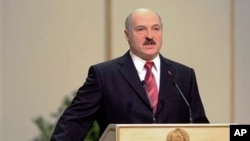
A U.S. Senate committee on Thursday heard testimony from U.S. and Belarusian rights activists who are demanding sanctions against the repressive regime of Belarus's President Aleksander Lukashenko.
David Kramer, a leader of Washington-based group Freedom House, noted that the crackdown on journalists, opposition and civic leaders has not stopped in Belarus since the December 19 presidential election. He said the situation is worse than after the 2006 election. Kramer said that could only mean that Mr. Lukashenko got less than 50 percent of the vote and is lashing out in fear of losing power.
Belarusian activist Natalia Kaliada, who was arrested during the post-election protest, described jail conditions. She said hundreds of men and women arrested during the protests were forced to stand facing a wall for hours before they were crammed into tiny cells, without access to water, food or toilets for several days.
Rights activists demanded the toughest possible sanctions against the regime, including withholding international aid. Kramer said that pressure and financial loss is the only language Mr. Luksahenko understands and that the policy of engagement has failed.
Activists also urged members of the U.S. Senate Foreign Relations Committee to call for financial support for Belarusian opposition groups, journalists and non-governmental groups.
Kenneth Wallack of the National Democratic Institute in Washington said Belarus should be expelled from all international organizations, including the OSCE, whose election monitors said the 2010 presidential process did not meet standards.
Wallack said the U.S. should act jointly with the European Union and other members of the international community. He said such joint action has drawn the world's attention toward the situation in Ivory Coast.
Asked whether engaging Russia would help, Kaliada said Moscow does not care about human rights violations, but it could join an international action if it could benefit from it.
US Senate Committee Debates Sanctions Against Belarus