



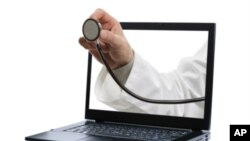
Telemedicine has been used for years to deliver medical care to remote locations by audio or video links. Now, Canadian researchers are exploring the possibility of using that same technology to provide rehabilitation services to stroke patients in remote areas.
Mention rehabilitation for stroke victims, and you probably think of hands-on therapists working to restore speech or mobility. But when patients live in a remote community hundreds of kilometers from the specialists they need, that kind of therapy may not be possible. Fortunately, for many residents of Northern Canada, a robust telemedicine system of audio and video links is being tried out for rehabilitation services.
Esme French, of the Thunder Bay Regional Health Sciences Center, led a pilot study to test the feasibility of the concept.
"We were able to identify rehabilitation needs post-stroke," she says. "There were particular needs related to mobility in terms of making sure people were safe. So often the therapists were looking at prescribing equipment, such as canes or walkers, looking at making suggestions of how to modify the home to make it safer for the client."
The small pilot project involved 10 video consultations between stroke patients and a team of rehabilitation specialists in Thunder Bay, a mid-size city near the U.S. border.
French says that, in addition to identifying how tele-rehabilitation could be effective, the experiment revealed limitations in the use of technology.
For example, speech pathologists said the audio link wasn't always clear enough for a proper evaluation. Another issue was that the video link was just one-way. Also, patients found talking into a camera when they couldn't see the therapist on the other end pretty impersonal.
"As we went on, we really did make an effort to try and establish that rapport with the clients," French says. "Definitely we are saying it does not replace face-to-face. But in the absence of any service, we have found that it is able to remove that barrier in some cases."
French's study didn't include an economic analysis, but she concedes it's expensive to set up a telemedicine network.
Once that's established, however, she believes it should be cost effective to provide rehabilitation services via remote audio and video links.
We reached Esme French via Skype at the Canadian Stroke Congress meeting in Quebec City.