



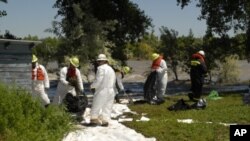
Environmentalists are pushing for tighter regulations after the rupture of an Exxon Mobil oil pipeline which runs beneath the Yellowstone River in Montana.
Before it was shut off, the burst pipe spilled as much as 1,000 barrels of crude oil - more than 160,000 liters- into the river, just downstream from famed Yellowstone National Park.
High-water conditions on the Yellowstone River make damage assessments risky, according to Claire Hassett, spokesperson for Exxon Mobil. “What we have learned so far has been hindered by the rapid flow of the river right now. It’s at historic water levels. It’s very turbulent.”
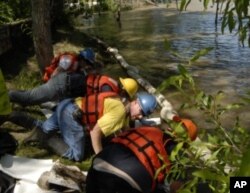
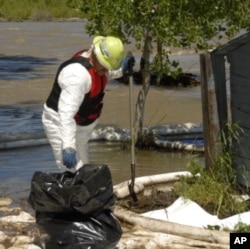
The river is at flood stage, overflowing riverbanks and moving fast, carrying oil as much as 24 kilometers downstream into marshes, fields and yards.
According to Hassett, local officials were so concerned about the heavy rains and rising waters, that they ordered a temporary shutdown to inspect the 20-year old pipe in May. The pipe is buried just below the Yellowstone riverbed.
“And we did that," she says. "We conducted the same assessment that we conduct on all pipelines within our operation and we determined that it was safe to operate and again we don’t know what caused this leak so it would be premature to say the two are related.”
The accident comes at a time of rising concern over oil and gas-pipeline safety across the United States.
According to a World Wildlife Federation report, pipeline accidents accounted for over 2,500 significant incidents, 161 fatalities and 576 injuries in the United States from 2000-2009.
The Natural Resources Defense Council has joined WWF and other environmental groups to call for tougher industry regulations.
Susan Casey-Lefkowitz, who directs NRDC’s International Program, says the Yellowstone rupture underscores the dangers posed by the network of pipelines criss-crossing the nation’s waterways.
Upstream of the oil spill, which is moving away from Yellowstone National Park. (NRDC)
“Especially when they are running under some of our most precious river systems that are important not just for wildlife, but also for our communities," says Casey-Lefkowitz. "The Yellowstone River is critical for irrigation, for example, and so it serves the needs of a lot of farmers and communities along its path.”
Andy Black is president and chief executive officer of the Association of Oil Pipe Lines, an industry group whose members include pipeline owners and operators.
“We don’t want any pipeline accident to happen and every accident is a bad thing,” he says. "We have processes both within companies and at the associations to share learning and best practices and pursue the goal which is zero accidents.”
Black adds that the already industry operates under strict federal and state government regulations. “I don’t see a need to overhaul the regulations. The regulations cover the major causes of pipeline failures, and we do not see any gaps.”
Casey-Lefkowitz with the Natural Resources Defense Council wants those regulations overhauled.
“Whereas the oil industry may find it business as usual to have a certain number of spills, it is really not acceptable, especially in this day and age," she says. "It shouldn’t be best practices to have spills in the Kalamazoo River in Michigan, in the Yellowstone River in Montana and potentially in the future in the Ogallala aquifer which would be crossed by this new proposed Keystone XL pipeline.”
The Ogallala aquifer is a major source of drinking and irrigation water for America’s central plains. Casey-Lefkowitz says the proposed Keystone XL tar-sands pipeline would carry heavier and more corrosive tarsand crude more than 3,200 kilometers from Canada across the central U.S. - and over the Ogalalla - to refineries in Texas.
“Ironically it would actually cross the Yellowstone River where the spill just happened,” says Casey-Lefkowitz.
Exxon Mobil's Hassett says the oil company takes full responsibility for the Yellowstone accident. “We have committed to be there as long as it takes to get it cleaned up.”
NRDC’s Casey-Lefkowitz says that’s not enough. She views the incident along America’s longest undammed river as a wake-up call for communities across the United States to demand stricter government controls to protect the nation’s natural treasures.