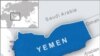



Yemeni President Ali Abdullah Saleh says he will not step down as long as his key rivals, a senior general who defected to the opposition and a billionaire tribal leader and his family, retain power and influence in the country.
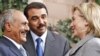
In an exclusive interview with The Washington Post and Time magazine, Mr. Saleh said a political transition plan crafted by Yemen's Gulf neighbors states that "all elements" contributing to the country's civil unrest should be removed.
He said that means he will not cede power if General Ali Mohsen al-Ahmar and Hamid al-Ahmar, a telecom tycoon and politician whose brother heads Yemen's most powerful tribal confederation, are eligible to run in future elections.
Mr. Saleh warned it would be "very dangerous" if the two men were to retain their positions after he resigns, saying that outcome could "lead to civil war." He accused his political rivals of hijacking Yemen's popular revolt in order to force him from office.
Mr. Saleh also indicated the general and the Ahmar clan may have played a role in a June attack on his palace in which he was severely wounded. He returned to the Yemeni capital last week after a three-month stay in Saudi Arabia to recuperate from the assassination attempt.
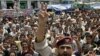
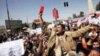
At least two people were killed Thursday in Sana'a, where fierce clashes erupted between forces loyal to Mr. Saleh and armed tribesmen who have sided with the opposition.
Witnesses reported explosions and heavy gunfire in several areas of the city, with government troops battling followers of tribal leader Sheikh Sadek al-Ahmar.
Fighting has escalated during the past two weeks. On Wednesday, anti-government tribesmen shot down a government warplane near the capital.
Yemen's foreign minister has blamed the turmoil on the opposition's refusal to accept 2006 presidential results. Abu Bakr al-Qirbi said Tuesday that Mr. Saleh is committed to pushing forward a long-stalled plan to transfer power to a deputy.
Mr. Saleh has agreed to the proposal three times since April, but has backed out each time before it could be signed.