News / Africa

Tunisian Prime Minister Hamadi Jebali Resigns

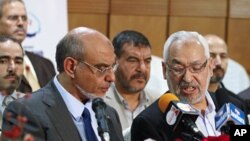
Rachid Ghannouchi (R), leader of the Islamist Ennahda party, speaks with his secretary-general Hamadi Jbeli (L) during a news conference in Tunis, October 28, 2011Rachid Ghannouchi (R), leader of the Islamist Ennahda party, speaks with his secretary-general Hamadi Jbeli (L) during a news conference in Tunis, October 28, 2011
x
Rachid Ghannouchi (R), leader of the Islamist Ennahda party, speaks with his secretary-general Hamadi Jbeli (L) during a news conference in Tunis, October 28, 2011
TEXT SIZE - +
Diaa Bekheet
Tunisian Prime Minister Hamadi Jebali has resigned after failing to form a new government in Tunisia.

Talks on the creation of a new government failed when his Ennahda party  rejected his efforts to form a cabinet of technocrats.

Jebali's resignation was monitored live on television in Washington.

Tunisia plunged into political crisis after secular opposition politician Chokri Belaid was gunned down outside his home in Tunis earlier this month, touching off anti-government riots around the country.

Jebali proposed his technocrat government initiative to guide the country to new elections in the wake of public outrage over Belaid's murder and had threatened to quit if his plan was rejected.

You May Like

Experts Weigh In on Challenges of Closing Guantanamo Prison

Former chief military prosecutor at Guantanamo delivers petition to White House with more than 370,000 signatures, demanding facility be closed down immediately More

Karzai to Discuss Enhancing Defense Ties with India

Afghanistan looking for more military aid as it prepares for withdrawal of NATO forces by next year More

India, China Pledge to Overcome Border Tensions

Indian prime minister and Chinese premier attempt to move past tense standoff in the Himalayas during Delhi talks More

Burmese President Opens US Visit with VOA Town Hall Meeting

Ahead of his meeting with President Obama Monday, Thein Sein answered questions on human rights and economic development in his country More

Featured Videos

Your JavaScript is turned off or you have an old version of Adobe's Flash Player. Get the latest Flash player.
Video

Video US Oil Surge Could Impact Mideast Geopolitics

The United States will account for a third of new oil supplies over the next five years, and will become energy self-sufficient in 20 years, according to a new report by the Paris-based International Energy Agency (IEA). Although U.S. oil imports from Arab Gulf countries increased last year, analysts predict the U.S. will lose its dependence on Middle East imports, which is expected to have a huge impact on international relations and the balance of power. VOA's Henry Ridgewell reports.