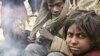




Marking World Food Day, FAO (U.N. Food and Agriculture Organization) Director General Jacques Diouf said food production must increase dramatically to ensure food security for the world's hungry. At a ceremony at FAO headquarters in Rome, Diouf also announced the eradication of the contagious viral cattle plague known as rinderpest by mid-2011.
"United Against Hunger" was the theme chosen this year to mark World Food Day at the United Nations Food and Agriculture Organization. Representatives of FAO member nations took part in the event at the food agency's headquarters in Rome.
Food security
Addressing those present, FAO Director General Jacques Diouf said this year's theme underlines that achieving food security is not the responsibility of one single party, but of all.
Diouf said hunger remains too high despite abundant global food supplies, better economic prospects and lower food prices.
"The present dramatic situation has come about because instead of tackling the structural causes of food insecurity the world neglected agriculture in development policies resulting in an under investment in the sector in particular in developing countries," Diouf said.
Diouf said that 925 million people still live in chronic hunger and malnutrition. The number, he added, represents a welcome decline from the 2009 level, but it is still unacceptably high. In addition, 100 countries require emergency assistance to rebuild their agriculture productive capacity and 30 nations are undergoing a food crisis.
Recipe for success
The director general provided his recipe to ensure food security for the world's hungry in the future.
"Food production will have to increase by 70 percent in the world and double in the developing countries to adequately feed a global population expected to reach 9.1 billion in 2050," he said.
Rwandan President Paul Kagame also addressed those gathered for the Friday ceremony. He called on governments to redouble their political will and determination to collectively deliver on their commitments to halve world hunger by 2015.
"In this day and age with the prosperity all around us and with unprecedented advances in science and agriculture technology we should not accept that countless numbers of people continue to die of hunger and related diseases," said Kagame.
Rinderpest project
The FAO Director General also made an important announcement during the World Food Day ceremony. He said the deadly cattle plague, rinderpest will be completely eradicated by mid-2011. The defeat of this disease is one of the most important achievements of united action.
"Rinderpest affected Africa, Asia and Europe for millennia and caused widespread famine and decimated millions of animals both domestic and wild," Diouf said.
Diouf added that FAO is concluding its field operations to combat rinderpest. He said this is the first time that an animal disease is being eradicated in the world.