


KAMPALA —
A new movie called "God Loves Uganda" has been stirring controversy at the Sundance Film Festival. The documentary accuses the American religious right of exporting homophobia to Uganda, and examines its impact on Ugandan politics.
The Sundance Film Festival wrapped up over the weekend, but one film is still making waves. “God Loves Uganda” is a documentary that charges that conservative religious groups in the United States have been working to demonize gays in Africa, and specifically, in Uganda.
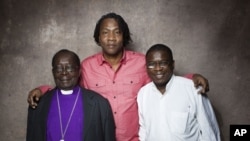
Bishop Christopher Senyonjo says that Westerners have been encouraging anti-gay sentiment in Uganda since colonial times. Senyonjo, who makes an appearance in the film, is one of the few Ugandan religious leaders who accepts homosexuality.
“Even the laws which were brought here by the British, the sodomy laws," said Senyonjo. "People have been keeping these laws, even making them worse, after we had become independent. And in Britain they are dismantling these laws, because they are coming to understand better.”
The plight of Uganda’s gay community has come to the world’s attention in recent years thanks to a bill currently before parliament, informally known as the “Kill the Gays” bill, which originally included the death penalty for certain homosexual acts. Senyonjo links the bill to a visit by American evangelical preacher, Scott Lively.
“When Scott Lively came over here, I attended what he was talking about at the Triangle Hotel, and after that he met a number of politicians," said Senyonjo. "After all these meetings, then the bill was drafted, which was really anti-homosexuality. And this has caused a lot of violence in some communities.”
The Ugandan member of parliament who proposed the bill, David Bahati, says it is “insulting” to suggest that Ugandans’ attitudes toward homosexuality are imported, and denies that the bill has anything to do with American influence.
“The bill before parliament is a Ugandan bill meant to address the current problems in Uganda, problems of promotion of homosexuality and other related issues," said Bahati. "It has always been an insult to say that we cannot identify the problems facing our nation and address them, we have got to be told by people from outside.”
But Ugandan gay activist Frank Mugisha says the language of the bill is suspiciously similar to that used by Lively himself.
“The preamble of the Anti-Homosexuality Bill [from] 2009 -- these are talking points from Scott Lively’s teachings when he was here in Uganda in 2009," said Mugisha. "Most of the words that are used, these are not Ugandan words. You can see that this language is borrowed. Words like ‘recruiting’, words like ‘promotion of homosexuality’, these are things that, in Uganda, are not referred to when you’re talking about sexuality.”
Part of what makes them so powerful, says Mugisha, is that American preachers do more than just preach. They also support the poor. He points to one American-led Pentecostal church in Uganda, which boasts tens of thousands of followers.
“Watoto Church - they support hundreds of orphans," said Mugisha. "So there is no way a gay activist like myself is going to compete with Gary Skinner, who is the owner of the church, in saying, ‘Ugandans, you should listen to me, you should not discriminate against anyone because of their sexual orientation’, when someone who is feeding the orphans is telling them homosexuality is an abomination.”
But at the end of the day, says Bishop Senyonjo, it is not just a question of money. Americans have grown less tolerant of the homophobic messages of their own right-wing preachers, he says, while Uganda’s conservative, religious society has been much more receptive.
“These people, I think they have a gospel they want to preach," said Senyonjo. "They think they are planting a seed here, where the ground is still able to have seeds germinate. So [they] plant more churches. And they’re excited to see that many people seem to be going to them. They think they are doing the right thing.”
Nor, he says, are they likely to stop at Uganda.
“From what I understand, Uganda is just a testing ground," said Senyonjo. "They are trying to go everywhere in Africa. They think Africa is still fertile for this kind of preaching.”
The anti-homosexuality bill could be debated as early as February, when Uganda’s parliament reconvenes.
The Sundance Film Festival wrapped up over the weekend, but one film is still making waves. “God Loves Uganda” is a documentary that charges that conservative religious groups in the United States have been working to demonize gays in Africa, and specifically, in Uganda.
Bishop Christopher Senyonjo says that Westerners have been encouraging anti-gay sentiment in Uganda since colonial times. Senyonjo, who makes an appearance in the film, is one of the few Ugandan religious leaders who accepts homosexuality.
“Even the laws which were brought here by the British, the sodomy laws," said Senyonjo. "People have been keeping these laws, even making them worse, after we had become independent. And in Britain they are dismantling these laws, because they are coming to understand better.”
The plight of Uganda’s gay community has come to the world’s attention in recent years thanks to a bill currently before parliament, informally known as the “Kill the Gays” bill, which originally included the death penalty for certain homosexual acts. Senyonjo links the bill to a visit by American evangelical preacher, Scott Lively.
“When Scott Lively came over here, I attended what he was talking about at the Triangle Hotel, and after that he met a number of politicians," said Senyonjo. "After all these meetings, then the bill was drafted, which was really anti-homosexuality. And this has caused a lot of violence in some communities.”
The Ugandan member of parliament who proposed the bill, David Bahati, says it is “insulting” to suggest that Ugandans’ attitudes toward homosexuality are imported, and denies that the bill has anything to do with American influence.
“The bill before parliament is a Ugandan bill meant to address the current problems in Uganda, problems of promotion of homosexuality and other related issues," said Bahati. "It has always been an insult to say that we cannot identify the problems facing our nation and address them, we have got to be told by people from outside.”
But Ugandan gay activist Frank Mugisha says the language of the bill is suspiciously similar to that used by Lively himself.
“The preamble of the Anti-Homosexuality Bill [from] 2009 -- these are talking points from Scott Lively’s teachings when he was here in Uganda in 2009," said Mugisha. "Most of the words that are used, these are not Ugandan words. You can see that this language is borrowed. Words like ‘recruiting’, words like ‘promotion of homosexuality’, these are things that, in Uganda, are not referred to when you’re talking about sexuality.”
Part of what makes them so powerful, says Mugisha, is that American preachers do more than just preach. They also support the poor. He points to one American-led Pentecostal church in Uganda, which boasts tens of thousands of followers.
“Watoto Church - they support hundreds of orphans," said Mugisha. "So there is no way a gay activist like myself is going to compete with Gary Skinner, who is the owner of the church, in saying, ‘Ugandans, you should listen to me, you should not discriminate against anyone because of their sexual orientation’, when someone who is feeding the orphans is telling them homosexuality is an abomination.”
But at the end of the day, says Bishop Senyonjo, it is not just a question of money. Americans have grown less tolerant of the homophobic messages of their own right-wing preachers, he says, while Uganda’s conservative, religious society has been much more receptive.
“These people, I think they have a gospel they want to preach," said Senyonjo. "They think they are planting a seed here, where the ground is still able to have seeds germinate. So [they] plant more churches. And they’re excited to see that many people seem to be going to them. They think they are doing the right thing.”
Nor, he says, are they likely to stop at Uganda.
“From what I understand, Uganda is just a testing ground," said Senyonjo. "They are trying to go everywhere in Africa. They think Africa is still fertile for this kind of preaching.”
The anti-homosexuality bill could be debated as early as February, when Uganda’s parliament reconvenes.