



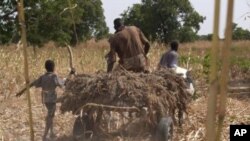


Mike Mack is the C-E-O of an international company called Syngenta. The company makes and sells products as seeds and herbicides. He says the world is hungry—and it’s only going to get hungrier.
“The demand for grain, particularly in emerging markets, is going to continue to grow," Mack says on a video on his company's website. "The demand on consumers for food security, healthy, abundant supply of high quality food is going to continue to be a factor, and of course this all within the context of climate change, competing demands for water, energy security…”
From a business perspective, the world’s increasing demand for food is good news — which is one of the reasons private multinationals like Syngenta are investing in agriculture in Africa. On May 22, Mack published an article in the US business paper "The Wall Street Journal" calling for even more international investors to invest in African agriculture technology and training.
These dollars are especially important for small farmers, the president of the UN's International Fund for Agricultural Development, Kanayo Mwanze, told reporters.
“So one point is for the initiative to ensure that the international private sector can contribute to transforming the small holder producer from a subsistence farmer to a commercial farmer.”
Yet Nwanze is quick to point out that international companies like Syngenta are not the only piece of the puzzle. He says African countries need to figure out how to develop local private sector investors, too. Local governments also have a role to play: they have to build local infrastructure such as roads, clinics, and schools so countries can support agribusiness. All that will require a mindset change, he says.
“The problem we have in many of our countries in Africa is that we do not use a long-term perspective to investment. We cannot build one thousand kilometers of road in one year. We can build one kilometer of road in every village in one year. But you have to look at a 25 to 50 year perspective.”
Nwanze says African leaders need to make decisions that do more than promote farmers’ short term interests. He says today’s investments and policies must look toward cultivating future generations, too.