News / Health

Amazon Deforestation Sparks Surge in Malaria

Study finds loss of trees creates hospitable environment for disease-carrying mosquitoes

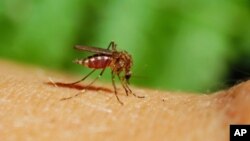
Experts say mosquitoes that transmit malaria thrive in the landscape that's left after forests have been cleared.

Multimedia

Audio
TEXT SIZE - +
Art Chimes

Deforestation is one of the big culprits in climate change. And now a new study from the Amazon links deforestation with an increase in malaria.

Despite eradication efforts, malaria remains a significant health problem in Brazil. There are around a half-million cases a year, mostly in the Amazon basin, a region heavily affected by deforestation.

Sarah Olson and her colleagues at the University of Wisconsin used satellite data to assess loss of forests and combined that with government surveys of malaria cases.

"We show that a five percent increase in deforestation was associated with a 50 percent increase of malaria risk in these health districts," said Olson.

She says the apparent explanation is that the mosquitoes that transmit malaria like the landscape that's left after the forests have been cleared.

"The habitat preference for this mosquito appears to be these partially-sunlit pools of water for the larvae. And that's the type of thing that we get when we start deforesting an area, and deforestation creates the ideal habitat," says Olson.

This is not the first study to show a link between deforestation and malaria, but Olson says her study is notable because of the rigorous way Brazilian health officials gathered the malaria data.

"This is super-high quality, and all of the cases are slide-confirmed. That means they take a drop of blood and they look at it under a microscope, and they can confirm that this was an actual case of malaria. Whereas a lot of studies are limited to basically asking, 'Did you have a fever in the last month or six months?'"

Sarah Olson's study appears in the July issue of the journal Emerging Infectious Diseases, which is published by the U.S. Centers for Disease Control and Prevention.  

You May Like

South Africa to Host World's Biggest Telescope

South Africa competed against Australia to host the telescope, the final decision was to split the SKA between the two countries More

Report: Global Warming Could Reverse Development

World Bank study says warmer climates threaten advances and could exacerbate poverty in world’s poorest regions More

Video Inmates Fight Fires, Gain Skills for Life After Prison

In California, physically fit inmates with no history of violent crimes can train, work as firefighters while serving their time More

This forum has been closed.
Comments
     
There are no comments in this forum. Be first and add one

Featured Videos

Your JavaScript is turned off or you have an old version of Adobe's Flash Player. Get the latest Flash player.
Video

Video Human Rights Film Festival Highlights Gender, Economic Issues

Twenty new films from around the world are screening in New York this week, as part of the 24th annual Human Rights Watch Film Festival, co-presented by the Film Society of Lincoln Center and IFC Center. The issues explored range from the rights of women, gays and the disabled, to economic justice, to political murder, torture and wrongful imprisonment. VOA’s Carolyn Weaver reports from New York.