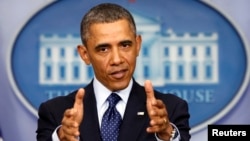
U.S. President Barack Obama is reaching out to what he calls the "caucus of common sense" to stop the $85 billion in government spending cuts that took effect Saturday.
Obama said in his weekly address that there are Republicans who want to end certain tax breaks for the rich and Democrats who want to reform big government programs like Social Security and Medicare. So, he says he will continue to reach out to both parties to find a compromise.
Watch President Obama's weekly address:
In the Republican response, Congresswoman McMorris Rodgers repeated Republican objection to raising taxes. She said the debate should focus on smarter spending cuts.
Watch weekly Republican address:
President Obama signed the spending cuts into law Friday. He was legally obligated to sign the order even if he did not want to.
The drastic cuts, known as a sequester, were meant to force Congress and the White House to reach a budget deal so they would never actually take effect.
Millions of Americans could be facing tough choices as the effects of the government cuts are gradually felt.
Some federal agencies have instituted a hiring freeze and cut spending on various projects to avoid worker furloughs.
Economists say poor families and the unemployed will lose benefits. Stores could see food shortages because of fewer meat inspections. There could also be delays in shipping and a lower demand for imported goods, which may hurt U.S. trading partners.
Defense Secretary Chuck Hagel says budget uncertainty puts the Pentagon's ability to carry out its missions at risk. Among other moves, Hagel said the Navy will have to ground planes, the Air Force will cut flying hours, and the Army will cut back on training.
Obama said in his weekly address that there are Republicans who want to end certain tax breaks for the rich and Democrats who want to reform big government programs like Social Security and Medicare. So, he says he will continue to reach out to both parties to find a compromise.
Watch President Obama's weekly address:
In the Republican response, Congresswoman McMorris Rodgers repeated Republican objection to raising taxes. She said the debate should focus on smarter spending cuts.
Watch weekly Republican address:
President Obama signed the spending cuts into law Friday. He was legally obligated to sign the order even if he did not want to.
The drastic cuts, known as a sequester, were meant to force Congress and the White House to reach a budget deal so they would never actually take effect.
Millions of Americans could be facing tough choices as the effects of the government cuts are gradually felt.
Some federal agencies have instituted a hiring freeze and cut spending on various projects to avoid worker furloughs.
Economists say poor families and the unemployed will lose benefits. Stores could see food shortages because of fewer meat inspections. There could also be delays in shipping and a lower demand for imported goods, which may hurt U.S. trading partners.
Defense Secretary Chuck Hagel says budget uncertainty puts the Pentagon's ability to carry out its missions at risk. Among other moves, Hagel said the Navy will have to ground planes, the Air Force will cut flying hours, and the Army will cut back on training.