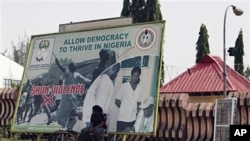



Nigerians go to the polls next month to vote in a new president, but Amnesty International says violence and corruption is threatening to undermine the vote.
The group says Nigeria’s leadership is doing little to stop the violence.
c says, "The Nigerian government is not doing enough to bring people to justice in connection with the violence, and this is creating and fostering a culture of impunity, which is allowing an escalation of violence leading up to April's elections."
In December of last year, around 80 people were killed in a bomb blast in Jos, a city in central Nigeria.
At least 100 more people were killed in Plateau state during months of violence that followed.
And since July of last year, Amnesty says more than 50 political killings have taken place. Earlier this month, a bomb blast killed at least 10 people at a political rally for the ruling party.
Freeman says there has been a clear spike in killings directly related to the elections.
"So we've seen political assassination. We've seen bombs. We've seen fighting between candidate supporters. We've seen attacks on rallies," said Freeman. "We've seen what seems to be an excessive use of lethal force by security officers resulting in children being killed who were just bystanders at a political protest. So it's an extremely worrying level of violence across the country."
The State Security Service said earlier this week that it will help police to protect political parties during the election period.
The Inspector-General of Police in Nigeria, Hafiz Ringim, said the police force is equipped and prepared to make sure the elections are credible and violence-free.
But Amnesty says the leadership in Nigeria has not taken a strong enough stance against violence.
"The government had clear warnings that this was going to happen. There were very violent elections in 2003," said Lucy Freeman. "There were violent elections in 2007, and yet action hasn't been taken to address this. And if we look at the other areas of insecurity, commissions of enquiry, questions asked about how [to] address the problem of security, nothing [has] been acted on."
Incumbent President Goodluck Jonathan will represent the People’s Democratic Party, which has won every presidential vote since 1999, when the country returned to civilian rule.
Amnesty Warns of Pre-Election Violence in Nigeria