



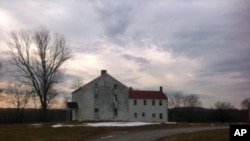
Archeologists in Frederick, Maryland are digging up the past, trying to piece together what the lives of slaves might have been like. French refugee farmers from Haiti kept slaves there in the early 1800s, and the National Park Service says the largest slave village in the Washington region is buried on the grounds.
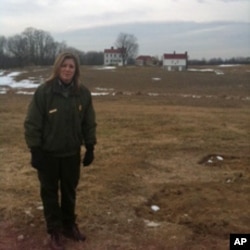
Archeologist Joy Beasley walks across the land now known as Best Farm. But approximately 200 years ago, it was a 300-hectare plantation called L'Hermitage, owned by the Vincendieres, French farmers from Haiti. Their stone home and outbuildings still stand. The National Park Service archeologist says her team discovered evidence of six other homes on the property where slaves were kept. The Vincendieres owned 90 slaves.
"That's roughly 10 times the number you'd expect them to have for the size of plantation they were operating," says Beasley. "That made them the second-largest slave holders in Frederick County and one of the largest in Maryland at that time."
The Vincendieres were also one of the most brutal, according to Beasley, who says it's likely the family imported the harsh slave system practiced in Haiti to Maryland.
"There's an eye-witness account that refers to stocks and whipping posts and wooden horses - torture devices, in other words - being visible on the farm."
The harsh treatment prompted Maryland officials to take the family to court on more than one occasion.
"Charges ranged from what are called cruel and unmerciful beatings to, there was one instance, where they were accused of not providing appropriate food and clothing for their enslaved population," says Beasley, adding the Vincendieres were found guilty at least twice.
Very little is known about these enslaved men and women. That's why anything that personalizes them - every coin, shell and artifact found by archeologists - is so relevant.
"These individuals had lives beyond what their masters expected them to do," says Stephen Potter of the National Park Service. "Here, we get to see glimpses of their private lives as a community and as families."
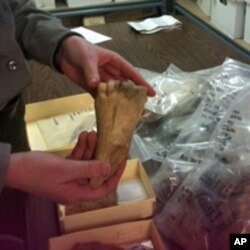
Back in their offices, Kate Birmingham is painstakingly cataloging all the items the team has found into plastic bags. The archeologists try to interpret what certain items might mean. For example, meat bones cracked open could mean slaves ate the marrow, and glazed ceramic fragments could explain how they cooked their food.
Birmingham says they've found many more buttons than they would normally expect. "We know that, based on where the chimneys were placed on the houses, it would have been very cold inside. A working guess is that they had excess clothing they were taking the buttons off of because the primary reuse of clothing would be as quilts."
But digging up the past is painful, says Mary Harris, who has researched African-American history in Frederick County. She's been following the excavation with interest. Harris says these slaves wanted what everyone wants: a home, family. She says they were survivors who provide a lesson for everyone.
"It's what they overcame. It's strength and perseverance," says Harris. "And we can use those things in our lives today."
National Park Service archeologists resume their work at the L'Hermitage site this summer. Joy Beasley says they hope to eventually set up a permanent exhibit, featuring the artifacts they recover, to tell visitors the story of the plantation's history.